 Book Consultation
What “Clean Interiors” Actually Means in a Bangalore Luxury Home
Clean gets used as a styling word — white walls, bare shelves, nothing busy. The version that actually matters is a set of material and storage decisions a home either has or doesn’t, and it shows up well after the photographer has packed up and gone.
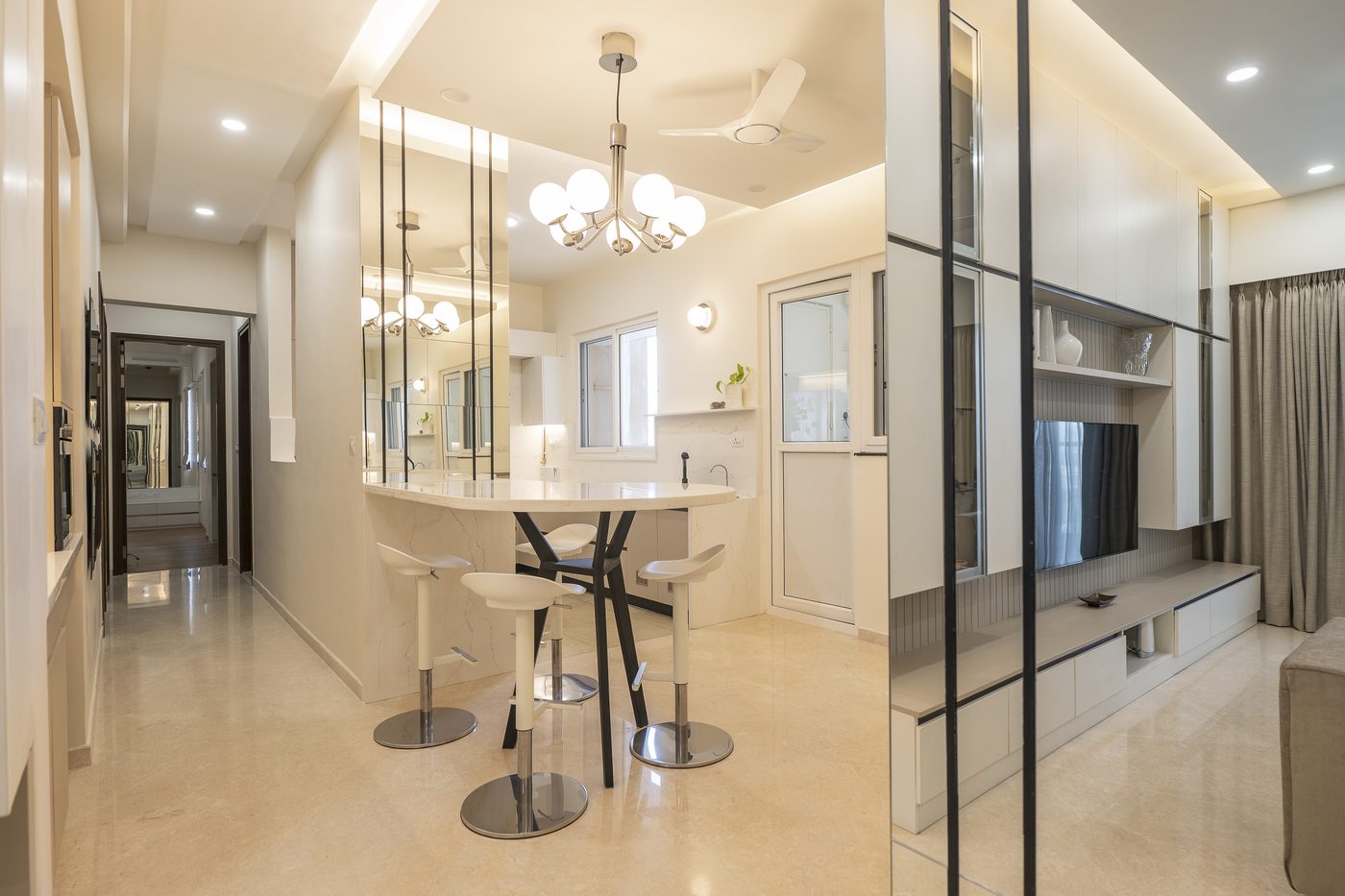
“Clean interiors” shows up in almost every design brief, and it almost never gets defined. Most of the time it’s shorthand for a look — pale walls, open floor, nothing busy on the shelf. That look photographs well on handover day. Whether it survives the next three years has very little to do with the colour palette and everything to do with three decisions made before a single wall was painted: what the surfaces are made of, where things get put away, and what’s in the air.
01 The word is doing two different jobs
Ask ten people what a “clean” home looks like and most will describe a style: minimal, pale, uncluttered. That’s a legitimate aesthetic, and plenty of Furdo projects use it. But style and function are different questions. A charcoal-and-walnut living room with the right surfaces and storage stays easier to keep clean than an all-white room built on porous stone and open shelving. The look is a choice. Staying clean is a specification.
That distinction matters especially in Bangalore, where dust from ongoing construction nearby and a long, humid monsoon put real demands on finishes that a showroom sample never faces. For a wider look at how a project’s specifications get decided room by room, see our room-by-room planning guide for Bangalore homes.
02 Surfaces: the difference between wiping and scrubbing
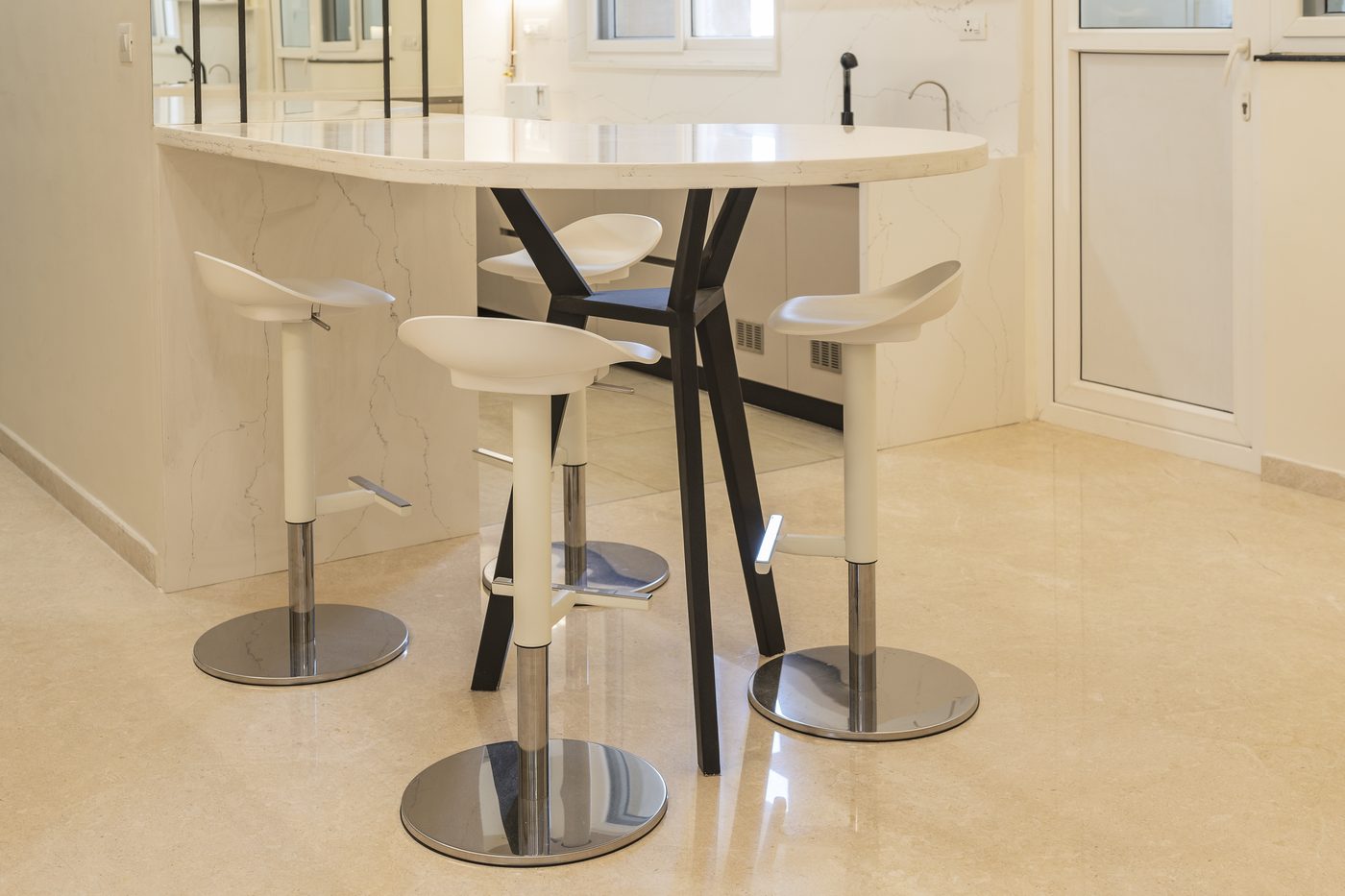
A surface is either non-porous or it isn’t, and that single fact decides how much effort it asks of you for the next ten years. Engineered quartz and sintered stone are resin- or mineral-bound, which means liquids sit on top rather than soaking in — a bowl of turmeric-spiced dal spilled on a quartz counter wipes off in seconds if you get to it promptly, where the same spill left to sit overnight can still tint the resin binder. Non-porous isn’t the same as stain-proof: it resists absorption, not pigment.
The one caveat worth knowing before you fall in love with a quartz island: it isn’t heatproof. The resin binder in engineered quartz can scorch at high, sustained heat, so a pan straight off the hob needs a trivet the same way it would on laminate. A counter you can set a hot vessel on without thinking twice is a sintered stone or granite conversation instead — and it’s worth naming the actual material to your designer rather than asking for “something that doesn’t scratch,” since the right answer changes by zone (an island that sees spills wants different material than a hob run that sees heat).
| Surface | Non-porous | Heat-tolerant | Needs sealing |
|---|---|---|---|
| Engineered quartz | Yes | No — trivets always | No |
| Sintered stone (e.g. Dekton, Neolith) | Yes | Yes | No |
| Granite | Mostly | Yes | Occasionally |
| Natural marble | No | Moderate | Yes, regularly |
The same logic applies above the counter. Lacquered and high-gloss cabinet fronts wipe clean in one pass, though they show fingerprints and smudges more readily than a matte or textured finish does. A matte shutter hides daily handling better; a gloss one wins on how fast a spill actually comes off. It’s a trade worth making on purpose rather than discovering after the first dinner party.
The maintenance reality, specified up front
Design is life engineering, not decoration — and a surface that looks clean on day one but demands constant upkeep by month six hasn’t solved anything. Every Furdo project specifies materials with their maintenance reality attached, not just their finish:
- Branded certified plywood carcasses, carrying a formaldehyde-emission certificate
- Soft-close hinges and runners — Hettich hardware, where specified
- High-definition, photoreal 3D renders of your own home before work begins
- A dedicated designer from first sketch to handover
- 4,500+ homes delivered, 4+ star rated
- A 10-year warranty
03 Storage is a hygiene decision before it’s a style one
An open shelf collects dust at the same rate whether it’s holding books or ceramics; a cabinet with a door doesn’t. Most show-flats quietly skip this: open shelving looks beautiful on handover day and needs wiping every week after. A home with zero visible objects reads as sterile rather than considered, so the real decision is which surfaces earn a place in the open — behind glass, where dust still settles but can wait a week between cleanings — and which go behind a solid shutter, where everyday clutter disappears for good.
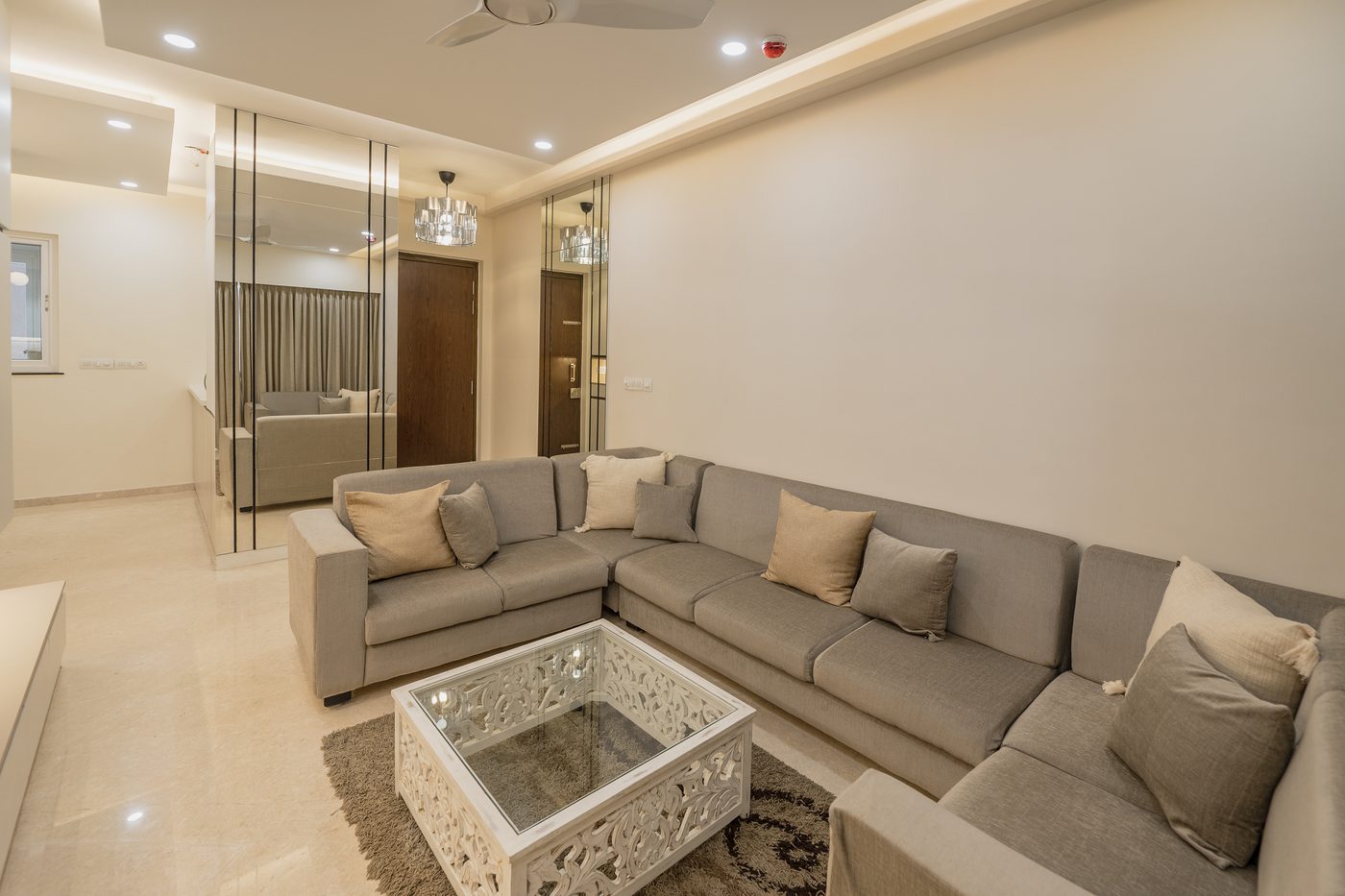
Soft furnishings are the other half of this question. A tightly woven, solution-dyed upholstery fabric resists spills, sun-fade and daily wear far better than a loosely woven or untreated one, and it is worth specifying by name rather than leaving to whatever the showroom has in stock that week.
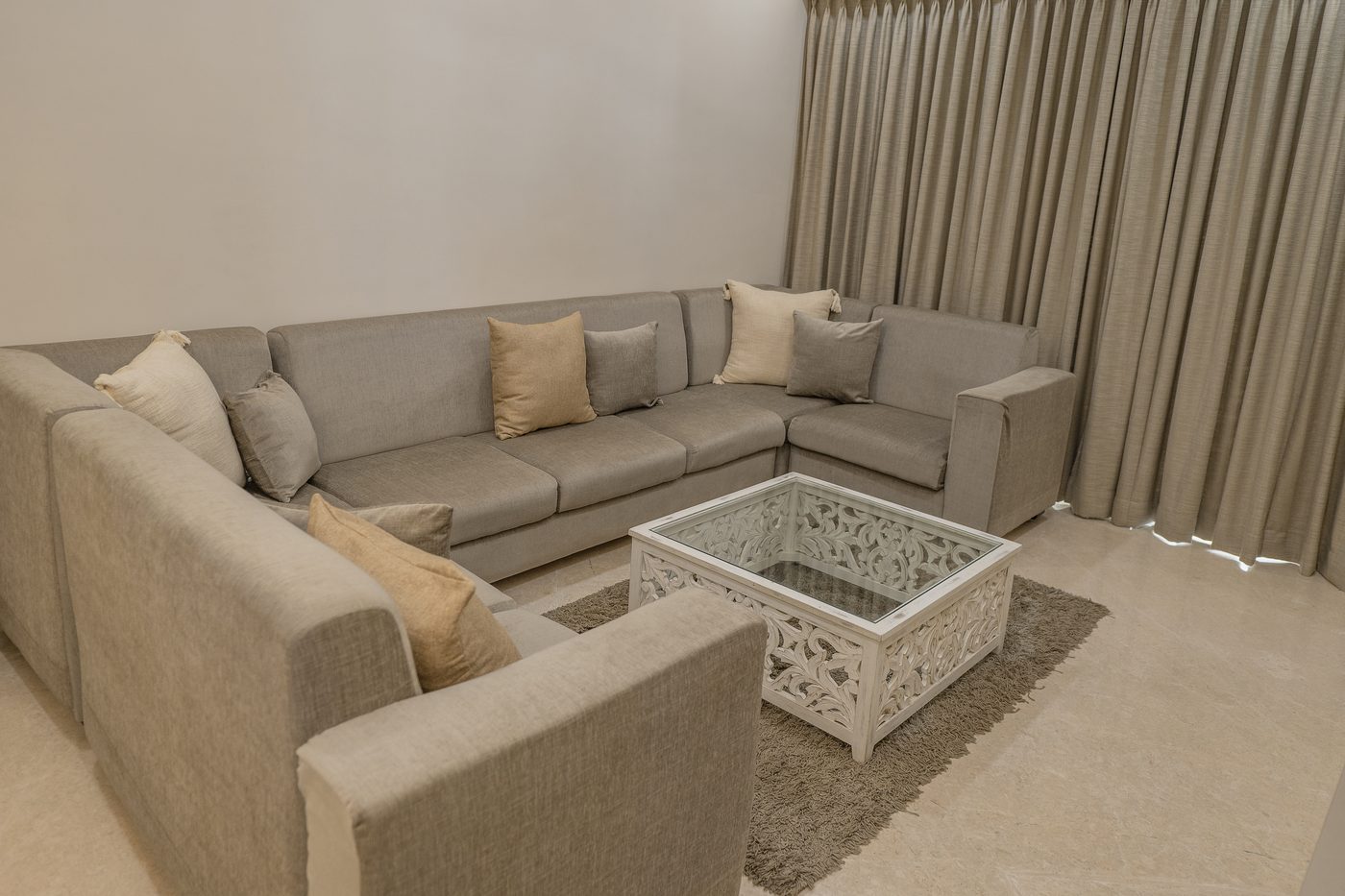
This is also where the Flow pillar of Furdo’s design approach does its quiet work: a place for everything, and everything in its place, is a storage plan drawn before the first shutter is cut, not a tidiness slogan added afterward. Our guide to kitchen materials and layouts that last goes deeper on exactly this trade-off, for the room where storage and surfaces matter most.
04 The air in the room is part of “clean” too
A room can look spotless and still work against the people breathing in it. High-formaldehyde boards and solvent-heavy finishes off-gas for months after installation. That’s why the Breathe pillar of Furdo’s design philosophy specifies branded certified plywood and water-based finishes rather than the cheapest board that will pass a site visit — the same logic as a non-porous counter, applied to the air a family breathes instead of the surface it touches.
Natural cross-ventilation and genuine daylight help with this too, which is part of why Vastu’s traditional emphasis on north-east light and open circulation keeps resurfacing in modern planning guides, including Furdo’s own — it isn’t superstition so much as old language for fresh air and clear sightlines, the same things a well-ventilated, uncluttered room needs regardless of what the principle is called.
05 What to actually ask before you call a home “easy to maintain”
- Which surfaces are non-porous (quartz, sintered stone, lacquer), and which are porous and need sealing or more frequent care (natural marble, untreated wood)?
- Near the hob specifically, is the counter material heat-tolerant, or does it need trivets the way quartz does?
- How much of my storage is closed cabinetry versus open shelving, room by room — and did I choose that ratio on purpose?
- What hardware is specified for daily-use doors and drawers, and is it rated for years of repeated closing, not just the first month?
- What board grade and finish are being used behind the visible surface, and can I see its formaldehyde-emission certificate?
If cost is the question sitting behind all of this, our interior design cost guide for Bangalore breaks down where a typical ₹20–25 lakh interiors budget actually goes, material grade included.
Specify a home built to stay easy to live in.
Book a design consultation06 Frequently asked questions
Is quartz really maintenance-free?
Quartz is non-porous, which makes everyday spills easy to wipe clean, but it isn’t maintenance-free or indestructible. It can scorch under sustained high heat, so hot vessels still need a trivet, and strongly pigmented spills (like turmeric) should be wiped promptly rather than left to sit.
Does a minimalist, all-white interior automatically mean it’s clean and low-maintenance?
No. A pale, minimal palette is a style choice, not a maintenance one. A white room built on porous stone and open shelving can need more upkeep than a darker room built on non-porous surfaces and closed storage. The materials and storage decisions matter more than the colour.
Why does closed storage matter more than how a shelf is styled?
Open surfaces, however nicely arranged, collect dust at the same rate as a cluttered one. A door or shutter is what actually keeps dust and daily clutter off a surface between cleanings, which is why Furdo treats the ratio of open display to closed storage as a planning decision, not an afterthought.
What does “low-VOC” actually mean for a home being built right now?
It means specifying branded certified plywood and water-based finishes instead of high-formaldehyde boards and solvent-heavy lacquers, so the materials off-gas less into the air you and your family breathe in the months after installation.
Is Vastu relevant to a “clean interiors” conversation?
Furdo designs homes that are Vastu-conscious where relevant to a client’s wishes. Its traditional emphasis on north-east light, intentional entrances and clear circulation lines up with the same practical goals as a well-ventilated, uncluttered room — good airflow and daylight, not superstition.