 Book Consultation
The Luxury Materials Guide: Plywood, Veneer, Stone and Fabric
What most interior quotes don’t tell you about what’s actually inside the wardrobe carcass, behind the TV panel, or under the counter.

Ask most interior quotes what’s actually inside the wardrobe carcass, behind the TV panel, or under the marble-look counter, and you’ll get a brand name if you’re lucky, and a shrug if you push further. That gap between what’s promised and what’s delivered is where most interior budgets quietly leak — not on the visible finish, but on the material nobody asked to see.
A material isn’t just a finish. It’s the air your family breathes for years afterward, and the thing your budget is actually paying for. Here’s what plywood, veneer, stone and fabric are actually doing in your home, in plain terms, and where Furdo draws its own line.
01 Plywood: the part of the home you never see and always live with
Plywood is the structural core behind almost every piece of built furniture in your home — wardrobes, kitchen cabinetry, TV units, bed frames. The single biggest variable isn’t the plywood brand printed on the box; it’s the adhesive used to bond its layers, which affects how much the board off-gasses into your room’s air over time.
Furdo builds exclusively in branded certified plywood, manufactured in-house rather than outsourced to a local carpentry unit working off a verbal spec. That’s a deliberate trade against the two things that quietly undercut most interior budgets: unbranded board substituted mid-project, and an adhesive standard nobody discloses.
02 Veneer versus laminate: the difference is what’s underneath
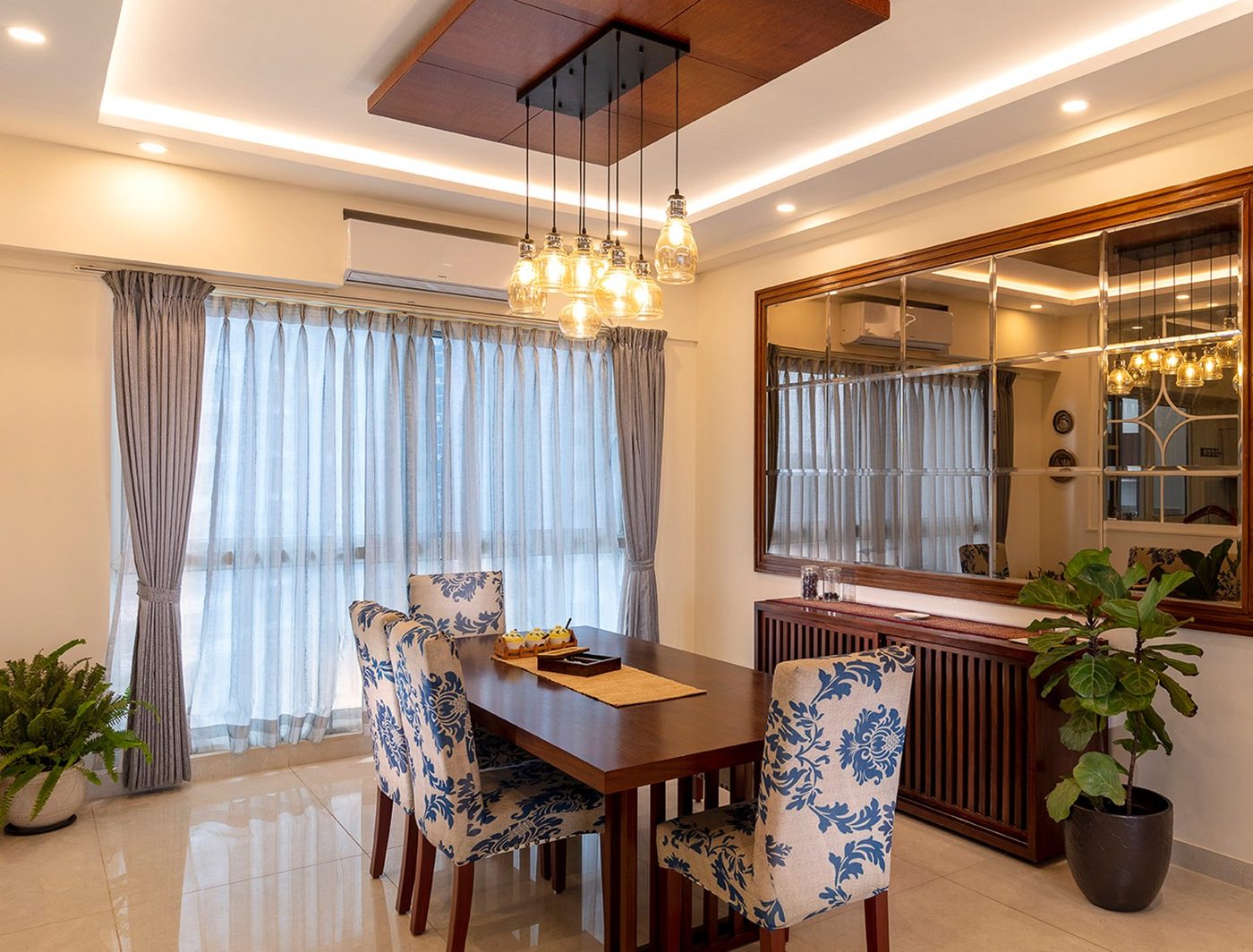
A veneer is a real, thin slice of natural wood, bonded over a plywood core — it carries the grain, the colour variation, and the slightly imperfect character of an actual tree. A laminate is a printed synthetic sheet designed to look like wood from three feet away. Both have a place in a home; the mistake is paying veneer prices for laminate performance, or the reverse.
03 Stone: not one material, three very different jobs
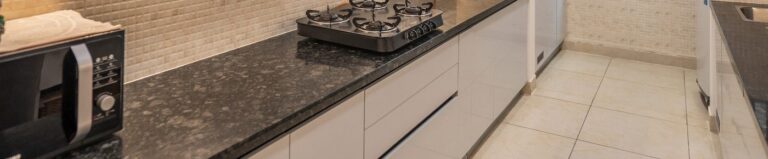
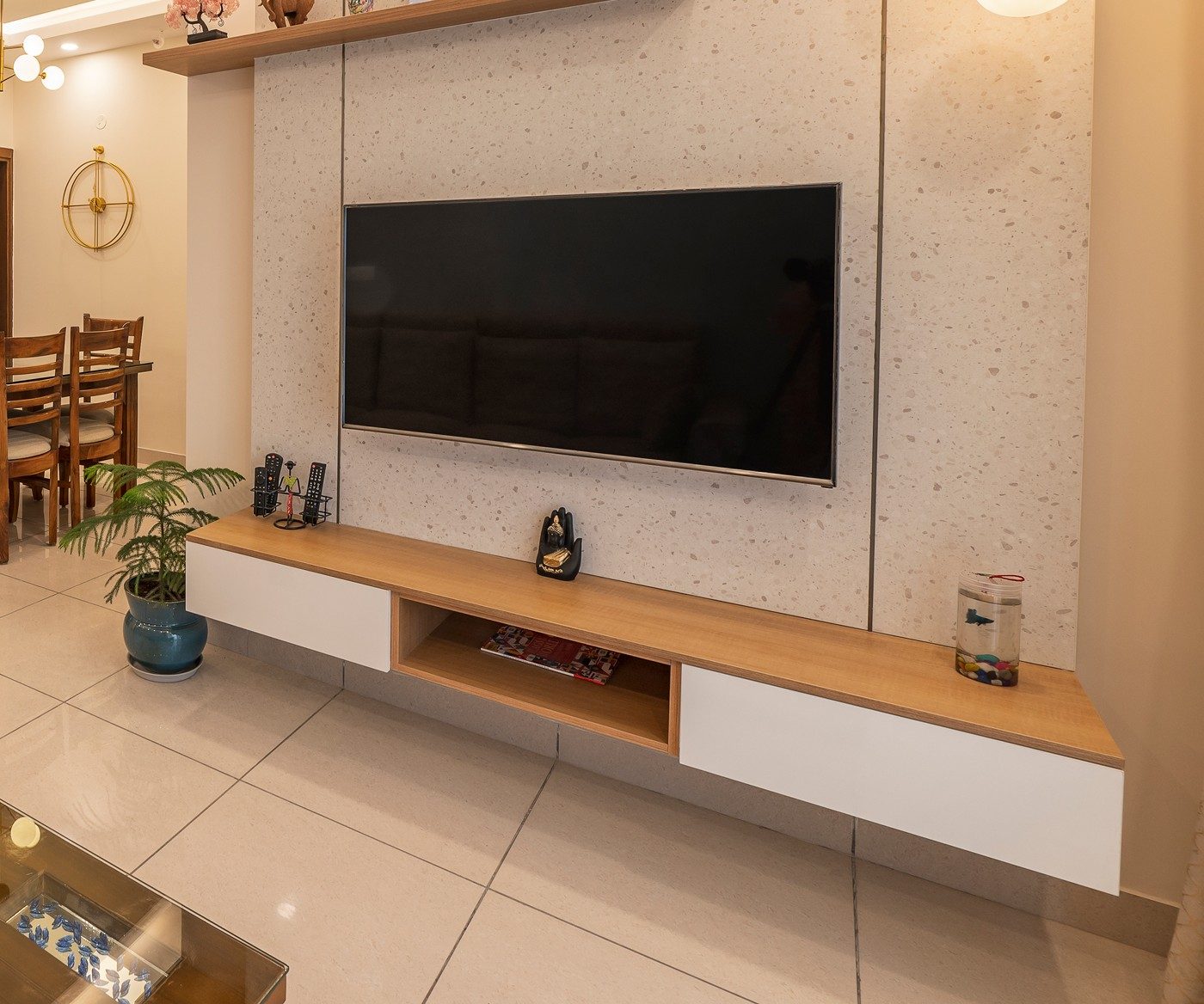
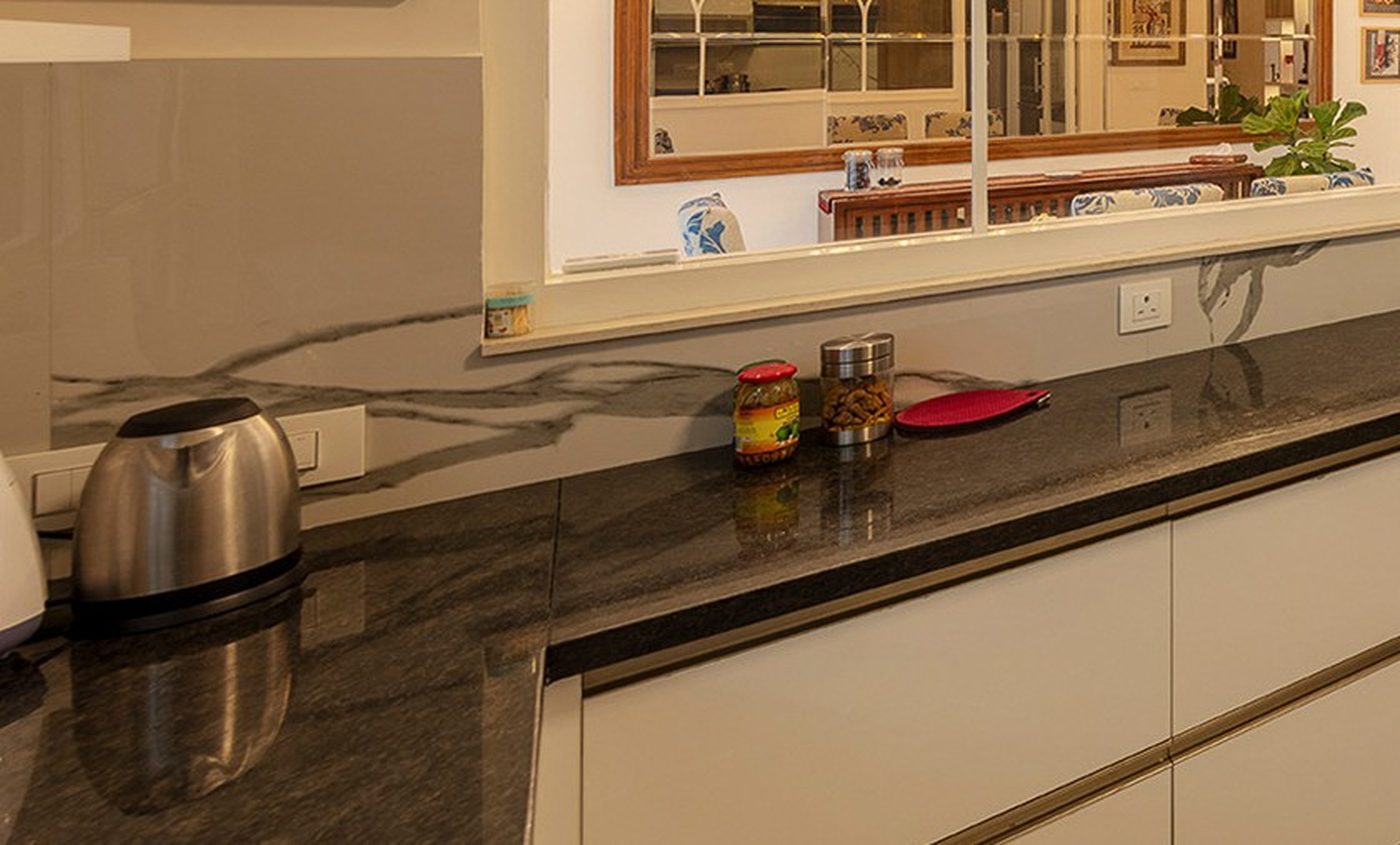
“Stone finish” gets used as a single category in most quotes, when it’s really doing at least three different jobs in a home: a dense, sealed natural or engineered stone on a kitchen counter that has to resist heat and staining daily; a lighter-weight stone or stone-look panel as a TV or feature wall, chosen mostly for how light plays across its texture; and a polished stone threshold or flooring inlay, chosen for durability underfoot. Specify the wrong one for the wrong job — a soft, porous stone on a kitchen counter, or a heavy slab where a lightweight panel would do — and you either pay for strength you don’t need or get staining you didn’t expect.
04 Fabric: the material decision most quotes skip entirely
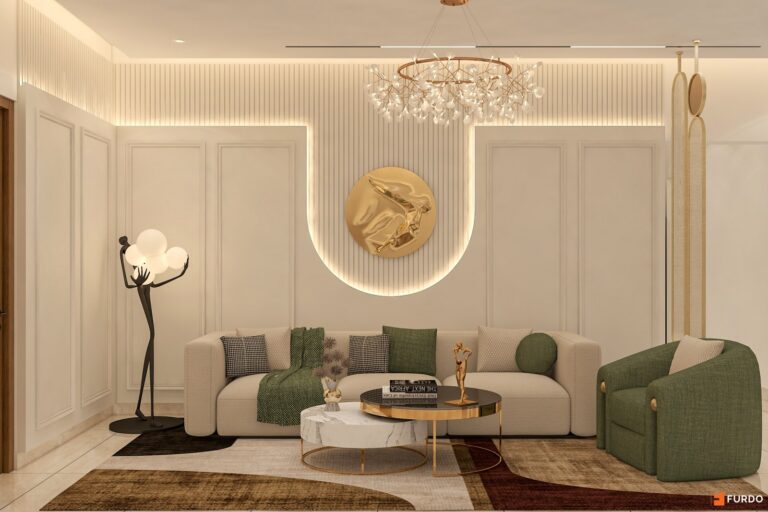
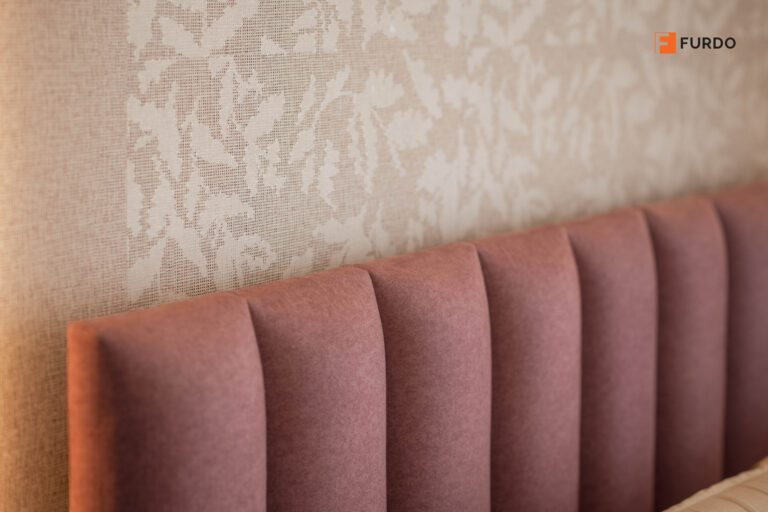
Upholstery fabric is rarely itemised with any real specification in a standard interior quote — “fabric sofa” covers everything from a durable, family-ready weave to something that pills within a year. We specify by rub count and fibre content for anything load-bearing (a dining chair, a sofa, a headboard), and reach for cotton and linen over synthetic blends wherever the room allows — softer against skin, and it ages the way natural materials should.
It shows up eighteen months later, not on day one
None of this shows up in a walkthrough photo. It shows up as a wardrobe shutter that’s started to swell, a laminate edge lifting at the corner, or a counter that’s stained despite being wiped down daily. That’s why Furdo backs every material decision, visible or not, with a 10-year warranty, and manufactures in-house instead of subcontracting the one part of the job nobody checks.
- 10-year warranty on woodwork
- 4,500+ homes delivered
- In-house manufacturing
- Branded certified plywood
- Hettich hardware
- 3D renders for 2 rooms before you commit
05 A five-minute checklist before you sign a material spec
- Does the quote name the plywood brand and grade, not just “premium ply”?
- Is a veneer described as veneer, and a laminate described as laminate — not one priced like the other?
- Is the stone specified differently for a counter, a feature wall, and a floor inlay, or treated as one category?
- Is upholstery fabric specified by rub count and fibre content, or just “fabric”?
- Is every material decision, visible or not, backed by the same warranty?
Ask us what’s actually inside your quote.
Book a Design Consultation06 Frequently asked questions
What’s the difference between veneer and laminate?
A veneer is a real, thin slice of natural wood bonded over a plywood core. A laminate is a printed synthetic sheet designed to look like wood. Paying veneer prices for laminate performance, or the reverse, is a common quote-reading mistake.
Why does the plywood adhesive matter, not just the brand?
The adhesive used to bond a board’s layers affects how much it off-gasses into a room’s air over time, which matters more for long-term air quality than the brand printed on the box.
Is one type of stone right for every surface?
No — a kitchen counter needs a dense, sealed stone for heat and stain resistance, a feature wall can use a lighter stone-look panel chosen for texture, and flooring needs a different durability profile again.
What should a fabric specification actually include?
Rub count and fibre content for anything load-bearing, like a dining chair or sofa — “fabric sofa” alone doesn’t tell you whether it will hold up.
What materials does Furdo use?
Branded certified plywood, real veneer where specified as veneer, stone matched to its actual job, and fabric specified by rub count and fibre content — all backed by a 10-year warranty.