 Book Consultation
Sattva and the Materials That Age Well
Inside a Bangalore home where every finish was chosen for how it holds up in year five, not just how it photographs on handover day.

Interior design materials that age well are chosen for a different question than most showroom samples answer. It isn’t how a finish looks on handover day — it’s how it’s built to look five years in: whether a lacquer finish still catches light the way it did on day one, whether a wardrobe pull still sits flush, whether a kitchen counter still reads clean after a thousand ordinary mornings. This Sattva home in Bangalore was designed around that second question, and its material choices are worth walking through room by room.
Furdo took the same brief every home starts with — how should this family live — and paired it with a narrower, more technical one: which finishes actually hold their character over a decade of real use, and which ones are chosen for a photograph rather than for the next ten years.
01 Solid wood that gets better with use, not worse
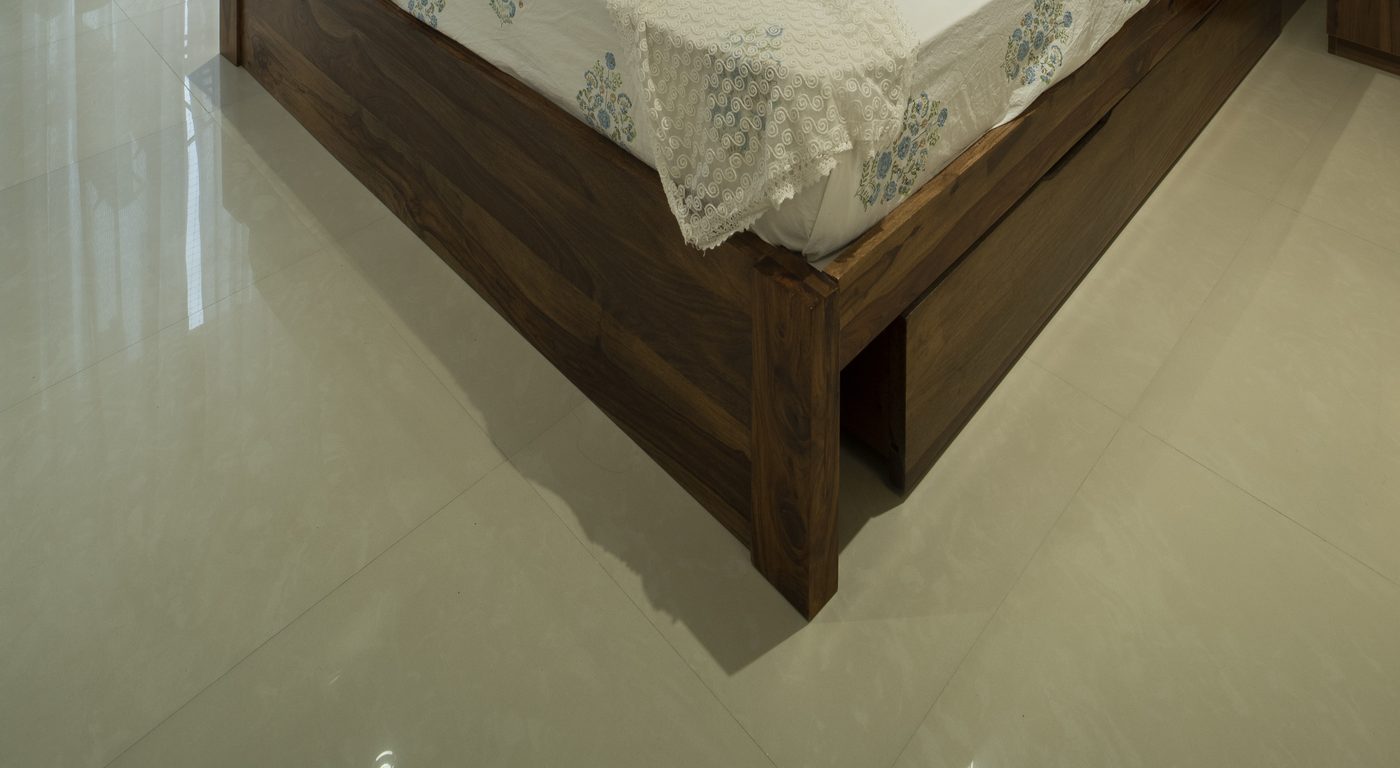
The primary bedroom’s bed frame is built in solid wood, finished to show its own grain rather than disguise it. That choice matters more than it looks: an engineered board with a printed wood-grain laminate can chip at a corner and expose the substrate underneath in a single visible line. Solid wood doesn’t have that failure mode — a scuff on a corner sands and re-oils back into the same piece, and the grain darkens slightly with age in a way that reads as character, not damage.
The joinery is the other half of the story. A corner that’s cut and glued well stays tight for years; one that’s under-specified starts to show a hairline gap at the same corner within a season or two, usually right where a family leans on it getting in and out of bed. It’s the kind of detail nobody notices when it’s done right, and everybody notices when it isn’t.
02 The lacquer finish and hardware that survive daily hands
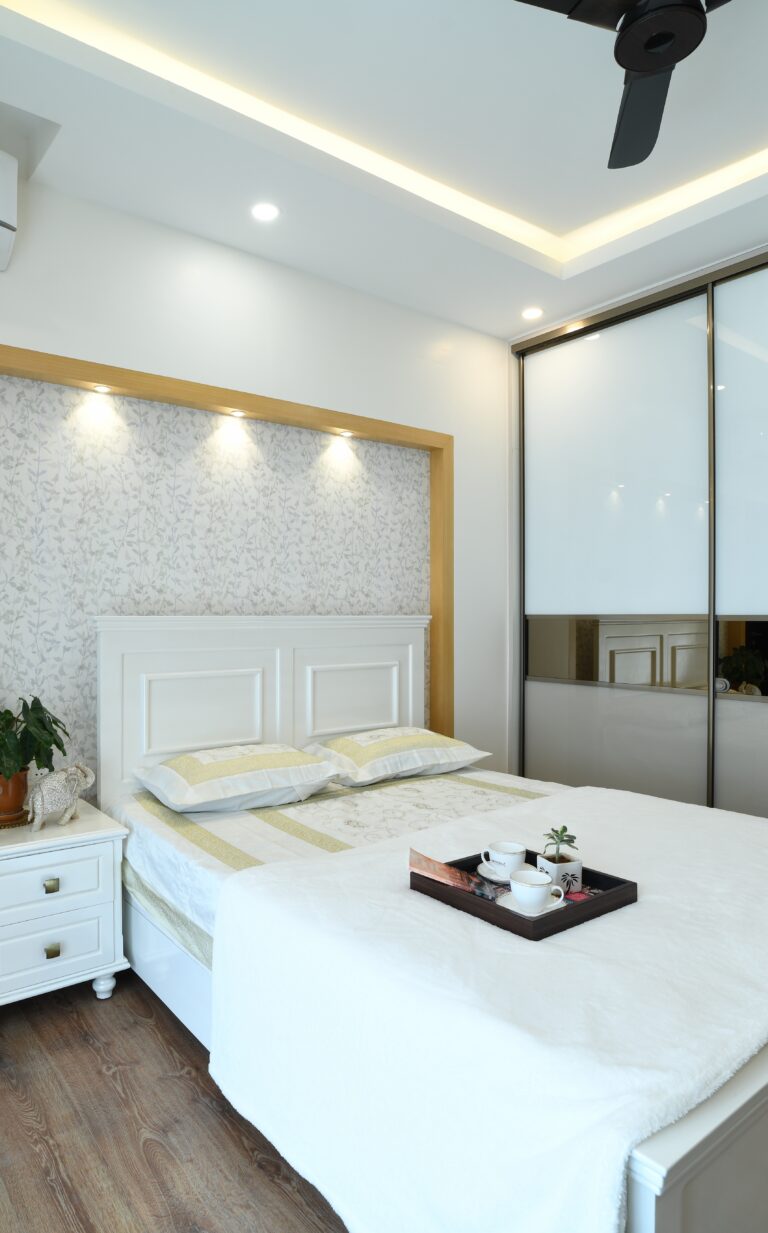
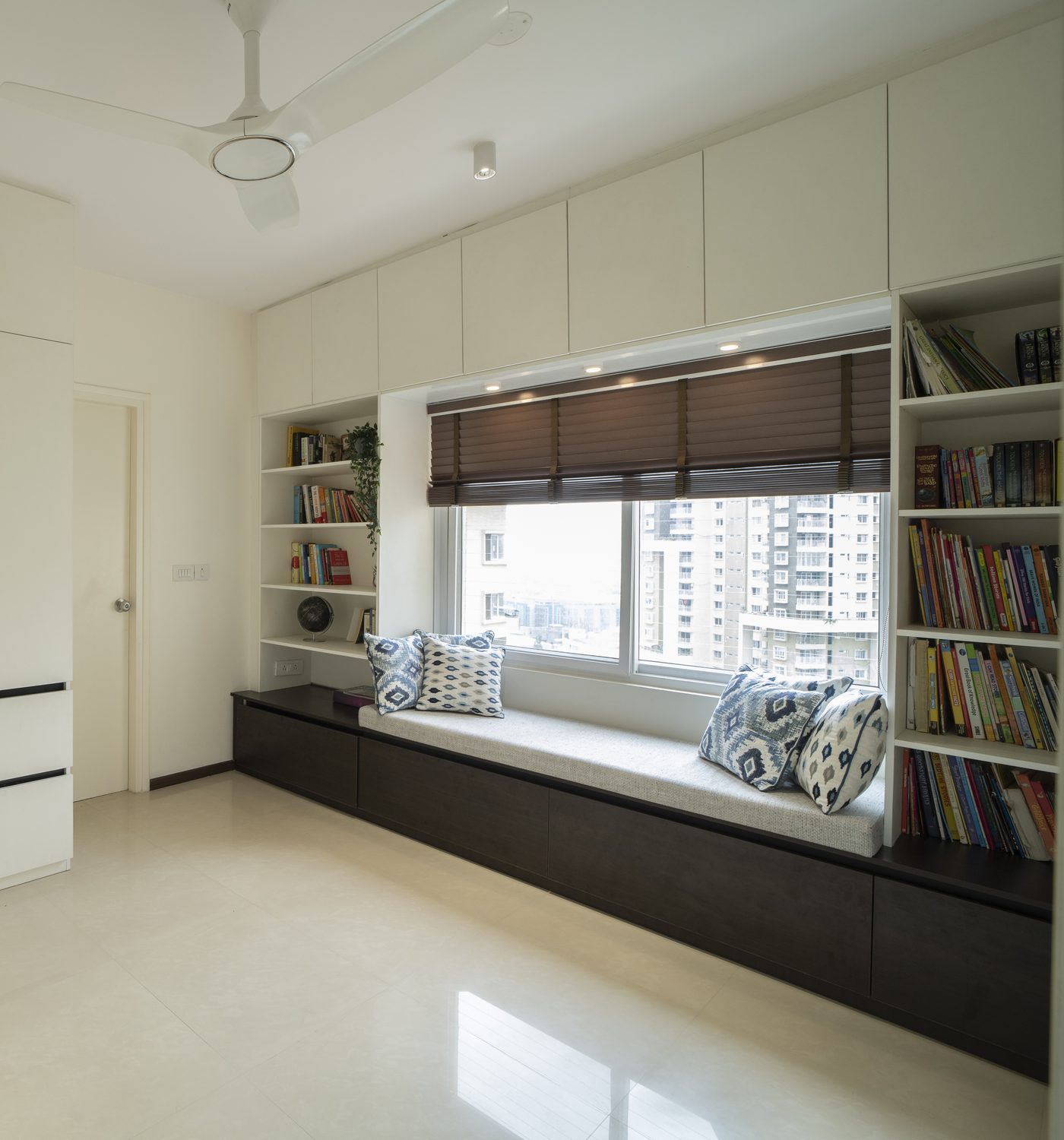
This home’s wardrobe wall and window-seat storage run in a matte white lacquer, edged in slim black linear pulls instead of knobs. Both choices are about wear, not just aesthetics. A high-gloss lacquer shows every fingerprint and micro-scratch under side light within months; a matte lacquer, properly catalysed and cured, resists both far longer, and any light scuffing that does happen blends into the finish rather than standing out as a bright scratch line. The recessed linear pull avoids the other common failure point — a protruding knob that loosens, wobbles, or eventually snaps off after enough daily use, usually from a child’s hand or a rushed morning.
The built-in bookshelf and window-seat bench in the same room are finished in a dark, close-grained wood veneer on the storage base — a real wood surface rather than a printed finish, chosen specifically because it doesn’t show the light scuffing that a pale finish would in a high-traffic reading nook, and because it ages the way solid wood does rather than the way a printed laminate does. Furniture-grade hardware behind the drawers — soft-close channels rated for tens of thousands of open-close cycles — is the unglamorous reason this run of storage still closes cleanly years after installation, long after cheaper channels would have started to drag or rattle.
03 Kitchen materials that don’t scorch or stain
Kitchens are where material choices get tested hardest and fastest — heat, oil, turmeric, and daily wiping in a single square metre of counter. The patterned tile backsplash in this kitchen is glazed ceramic, chosen because a glazed surface resists staining and oil absorption in a way an unglazed or textured tile doesn’t; it wipes clean rather than holding a faint tint after months of cooking.
One material myth worth correcting here: quartz counters are often sold as indestructible, but quartz is a resin-bound stone, and that resin can scorch or discolour under a hot pan set down directly — a trivet is genuinely not optional the way marketing sometimes implies. Granite and other natural stone counters handle direct heat better but are more porous and need periodic sealing to resist staining from turmeric, oil, and acidic spills — a genuinely durable, timeless counter is less about picking the “indestructible” material and more about matching the material to how the kitchen actually gets used. Neither material is a set-and-forget choice; both reward being specified and used correctly, and a good designer tells a client which trade-off they’re actually making rather than letting a showroom sample speak for itself.
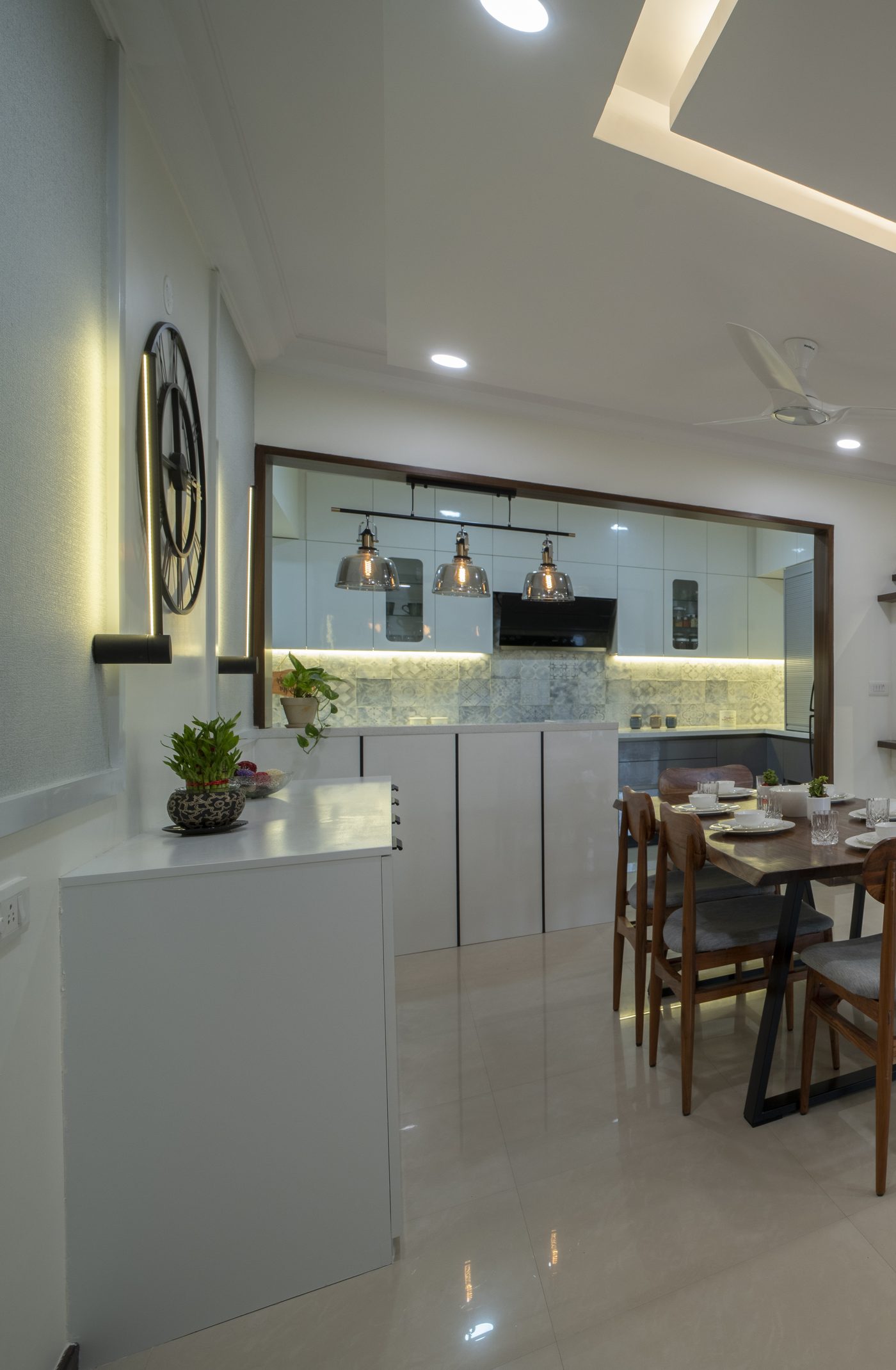
Specified for the next decade, not just the handover photo
Furdo designs and manufactures every project in-house, in branded certified plywood, finished with Hettich hardware, and backed by a 10-year warranty on the woodwork we build. You’ll see two rooms of your choice as high-definition 3D renders before a single panel is ordered, guided by one dedicated designer from first sketch to handover.
- 10-year warranty on woodwork
- 4,500+ homes delivered
- In-house manufacturing
- Branded certified plywood
- Hettich hardware
- 3D renders for 2 rooms before you commit
04 What “ages well” actually means
A material that ages well isn’t one that stays looking brand new forever — nothing does. It’s one where the visible signs of use read as character rather than failure: wood that deepens in tone, a matte finish that hides light scuffing instead of broadcasting it, hardware that keeps closing the same way on year five as it did on day one. The materials worth avoiding aren’t the ones that show any wear at all — they’re the ones that fail suddenly and visibly: a laminate edge that chips to raw substrate, a hinge that starts to sag, a counter that stains permanently after one spill left too long.
That distinction is also the most useful filter for a homeowner comparing quotes: ask what happens to a material in year three, not just how it photographs on handover day. Our Bangalore interior design cost guide breaks down how material grade moves the number on a quote, which is usually where a lower price is quietly being made possible.
Planning a home and want materials specified to actually last?
Book a Design Consultation05 How Furdo specifies for the long run
The material choices in this Sattva home follow the same filter Furdo applies broadly: branded, certified plywood over unbranded board, soft-close Hettich hardware over unrated channels, and a design sign-off on two rooms as 3D renders before manufacturing begins, so the client sees the actual finish, not just a swatch. If you’re comparing design-and-build firms for a project of your own, our guide to choosing an interior design partner in Bangalore covers the questions worth asking about exactly this — materials, warranty, and who actually manufactures what gets installed.
06 Frequently asked questions
What materials age best in a luxury home interior?
Solid wood with visible grain, matte (not high-gloss) lacquer finishes, glazed ceramic or porcelain tile, and furniture-grade soft-close hardware tend to hold their character longest, because light wear blends into these finishes instead of standing out as visible damage.
Is solid wood better than engineered wood for furniture that lasts?
Solid wood resists the most common failure mode of engineered boards — a chipped corner exposing the substrate under a printed laminate — and can be sanded and re-oiled if scuffed. Engineered boards with branded, certified cores are still a sound choice for carcasses and shutters when hardware and finish quality are specified well; the two aren’t interchangeable, they’re suited to different parts of a build.
Does quartz stain or scorch over time?
Quartz is a resin-bound stone, and the resin can scorch or discolour if a hot pan is set directly on the surface, so a trivet is genuinely necessary. It resists staining better than untreated natural stone in everyday use, but it isn’t heatproof the way marketing sometimes implies.
What is Furdo’s warranty on woodwork?
Furdo backs every project with a 10-year warranty on the woodwork it designs and manufactures in-house.
How do I know if interior wear is normal or a sign of poor material quality?
Gradual changes — wood deepening in tone, a matte finish showing light scuffing that blends in — are normal ageing. Sudden or structural changes — a chipped laminate edge exposing raw board, a hinge that sags, a hardware channel that starts to drag — usually point to under-specified material or hardware, not normal wear.