 Book Consultation
A Nine-Day Colour Guide to Navratri-Ready Interiors
Published colour-by-day lists change by source and by year. What stays constant for a Bangalore, Hyderabad or Chennai home is simpler: the right material foundation, and storage planned for a Golu display or a Bathukamma arrangement, make festive styling easy every single year.

Every year, in the days before Navratri, Furdo’s design team gets some version of the same question: which colour goes where? Published lists of the nine Navratri colours circulate every season — and they often don’t agree with each other, because the exact sequence can shift from year to year and source to source. This guide won’t hand you one more rigid day-by-day chart — plenty of those already exist. It covers what actually matters for a home: the regional festival practices families in Bangalore, Hyderabad and Chennai actually observe, a flexible palette, and design good enough to make nine days of colour effortless rather than a small renovation.
That’s a design question, not a calendar question. A home planned with a neutral, flexible base — the right wall tone, the right upholstery, the right storage for the things that come out once a year and go back in a box — makes Navratri-ready interiors simple. A home without that planning makes every festival a small renovation. This guide is about the first kind of home.
01 Why the “nine colours” aren’t really the rulebook
Navratri itself honours nine forms of Durga across the nine days — that part is long-established. The popular colour-of-the-day lists are a separate, newer custom layered on top, and they don’t fully agree with each other, because the exact sequence varies by region, by community, and by year depending on which source is compiling it. Treat any single published sequence as a loose seasonal mood board, not a fixed brief tied to the festival’s actual meaning.
In Bangalore and Chennai, many homes also set up a stepped Golu (Bommai Kolu) display through the nine days — dolls and figurines arranged on tiers, which stays up and needs real storage for the other eleven months. In Hyderabad and across Telangana, Bathukamma brings flowers and a stacked floral arrangement into the home instead. Both are a far more specific, far more relevant design question than any colour chart: where the display goes, how it’s lit, and where the pieces live once the festival ends.
For the colour question itself: treat it loosely. Choose from a warm, considered palette — deep red, marigold yellow, royal blue, soft pink, grey, orange, peacock green, white — and pick what actually suits the rooms you have, in whatever order feels right through the nine days.
02 Start from a neutral that can carry colour
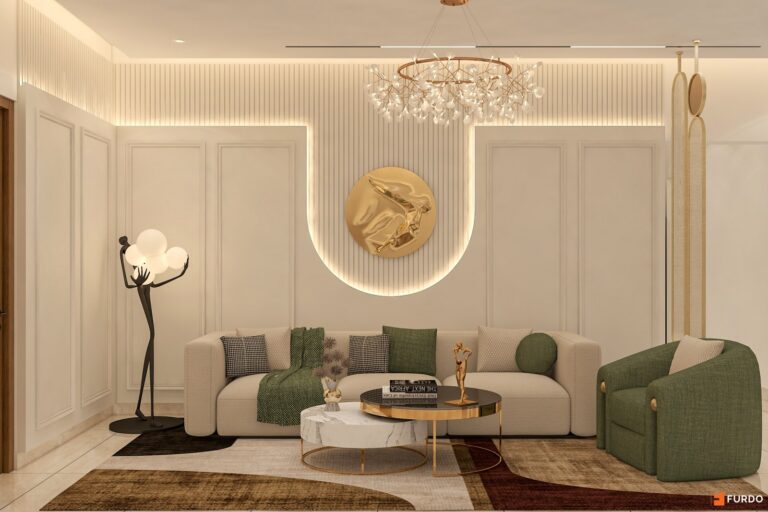
The single biggest factor in how easy festive styling feels is the base the colour sits on. A living room built around warm stone, soft sand, or a muted neutral wall takes a bold cushion, a runner, or a string of marigolds beautifully. A living room already crowded with strong colour, heavy pattern, or too many finishes fights every seasonal addition instead of showcasing it.
This is why Furdo’s own material direction leans toward warm minimalism — beige, sand, soft brown, muted grey, the occasional deep green — rather than stark, sterile white or an already-saturated palette. A warm neutral reads as considered year-round and becomes a genuine canvas every festive season, instead of a backdrop that has to be fought against.
03 Room by room: where festive colour actually earns its place
Not every room needs the same dose of colour, and that’s by design, not an oversight.
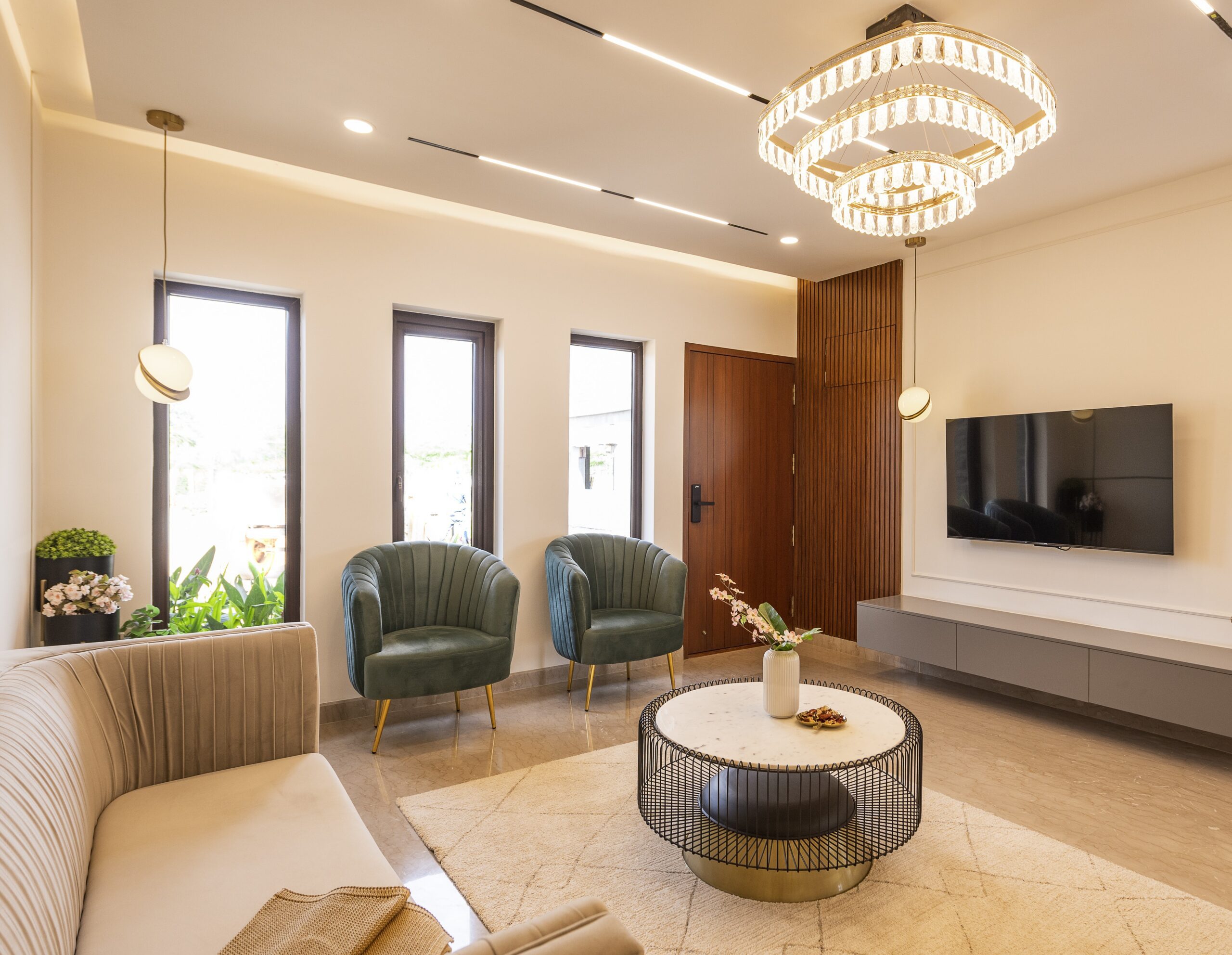
- Living and dining — the main stage. This is where most of the colour budget should go: a tablescape of brass or gold accents, a seasonal runner, a cluster of candles or diyas down the centre of the table. One strong gesture reads better than five small ones competing for attention.
- Entryway and foyer — the welcome. A small rangoli, a pair of diyas, a garland on the door. This is the highest-impact, lowest-effort zone in the whole home, because it’s the first thing anyone sees.
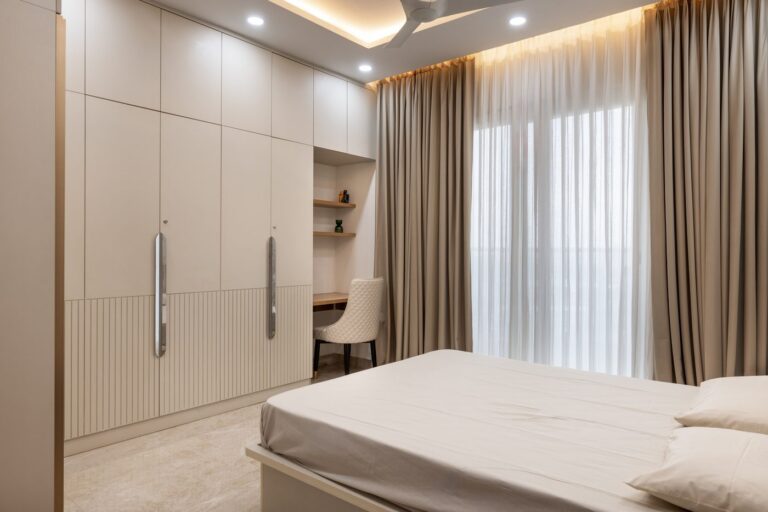
- Bedrooms — stay restrained. Furdo designs bedrooms around rest first — warm lighting, low visual noise, nothing that competes with sleep. Keep festive colour here to one small object, if any. A bedroom crowded with new colour and pattern during a festival week is a bedroom that stops doing its real job.
- The pooja corner — where many families already change the cloth or flowers daily. If your home has a dedicated pooja unit, this is where daily colour change naturally concentrates through the nine days — flowers, cloth, small diyas — without it spilling into every other room.
- A Golu or Bathukamma display — plan the storage, not just the spot. A stepped Golu needs a flat, stable surface clear for nine days and a place to store the dolls for the rest of the year; a Bathukamma arrangement needs a stand near natural light. Both are easiest in a home where that storage was planned at the design stage, not improvised every year in whatever cabinet has space.
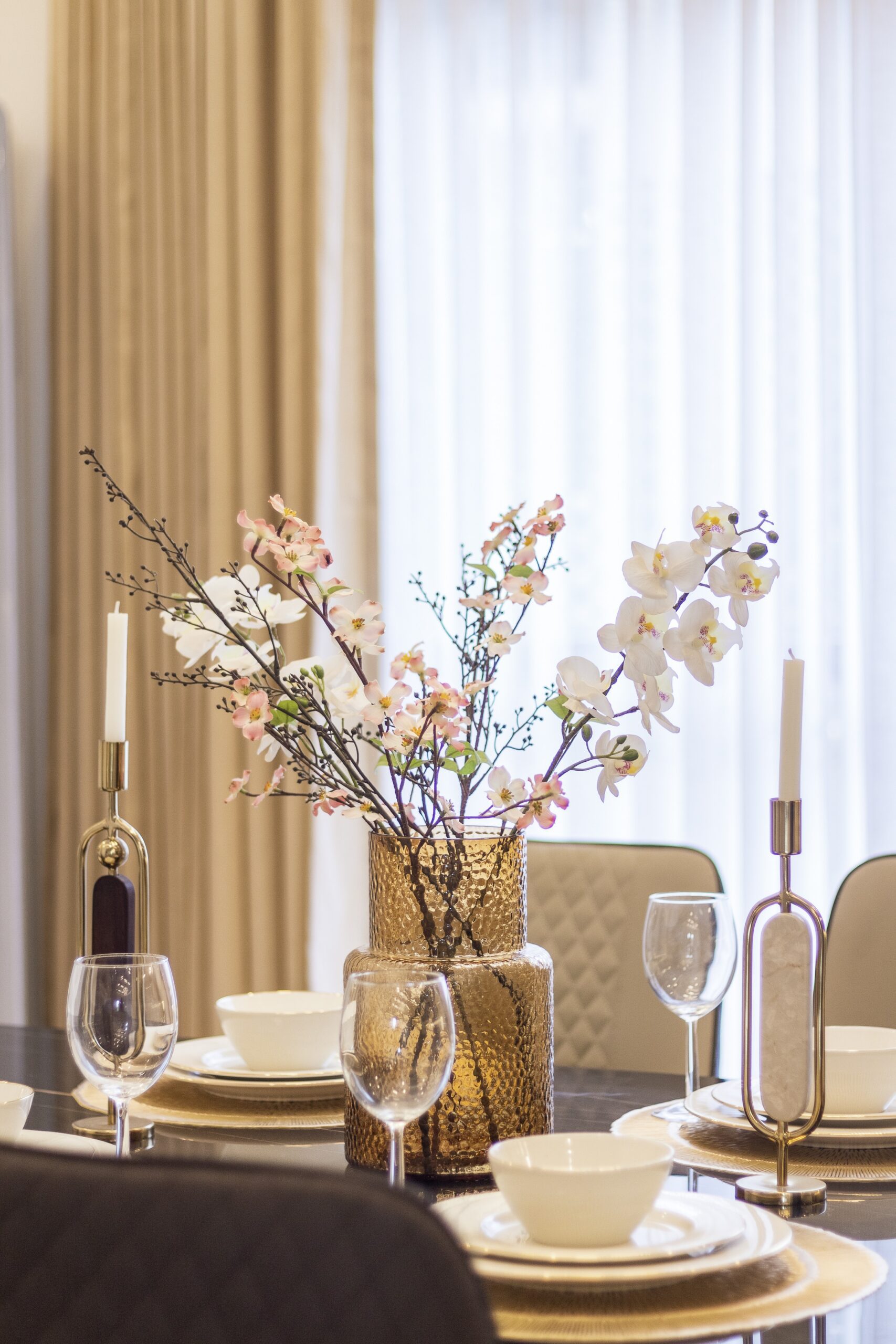
A well-designed home doesn’t need to change to feel festive. It needs one or two honest, well-placed gestures — and a base calm enough to let them stand out.
Designed to take seasonal change in stride
A home that handles festive styling well usually isn’t an accident. It’s the result of decisions made months earlier, at the design stage — the wall tone, the upholstery, the storage for things used only a few weeks a year.
Furdo has delivered 4,500+ homes across Bangalore, Hyderabad and Chennai, backed by a 10-year warranty. Cabinets and wardrobes are built from branded certified plywood with Hettich hardware, and every client sees high-definition, photoreal 3D renders of two rooms of their choice before a single piece is made — so the neutral base a home is built on is a considered choice, not a leftover decision.
- 10-year warranty
- 4,500+ homes delivered
- Branded certified plywood
- Hettich hardware
- 3D renders before you commit
- A dedicated designer from sketch to handover
04 Keep it reversible, not permanent
The homes that handle Navratri — and every other festival after it — most gracefully share one habit: almost nothing about the room is permanently altered. The colour comes from things that pack away, not things that get repainted or rebuilt.
| Change it for the season | Leave it alone |
|---|---|
| Cushion covers, table runners, throws | Wall colour and finish |
| A vase of seasonal flowers or marigold strings | Upholstery on main seating |
| Brass or gold decor accents, candles, diyas | Cabinetry, wardrobes, structural joinery |
| A door garland or small rangoli at the entry | Flooring and false ceiling |
This only works smoothly when storage for the seasonal pieces was planned at the design stage — a drawer or shelf sized for the diyas, the extra table linen, the rangoli stencils, so they have a home the other eleven months of the year instead of cluttering a cabinet meant for something else. That kind of planning is a design decision Furdo makes early, specifically so a family can style for a festival in an afternoon rather than a week.
Want your Golu steps, Bathukamma stand or festive storage planned in from day one, not improvised every year?
Book Consultation
05 A Vastu note for the festive season
Many of the families Furdo designs for weigh Vastu when planning their homes, and Navratri is a natural moment to be mindful of it again. A pooja corner placed in the north-east, with clear light and an uncluttered threshold, is common Vastu guidance for that space. Beyond that, the simplest version of Vastu-conscious festive styling is the same principle that runs through good design generally: natural light where you can get it, clear pathways through the main rooms, and nothing blocking a doorway, including during nine days of extra decor.
06 How Furdo designs for moments like this
Furdo’s process is Design, Build, Handover — a dedicated designer works with you from the first sketch, and you see high-definition 3D renders of two rooms of your choice before committing to anything. That early design phase is where a wall tone that will carry colour well, upholstery that won’t fight a festive cushion, and a Golu shelf or Bathukamma stand with its own storage all get decided — not improvised the week before a festival.
07 Frequently asked questions
Do I need to repaint or redecorate my home for Navratri every year?
No. A home with a warm, neutral base can take festive colour through textiles, flowers and small accents alone — nothing structural needs to change.
What do the nine Navratri colours actually mean?
Each day of Navratri honours one of Durga’s nine forms — that part is long-established. The popular colour-by-day lists are a separate, newer custom layered on top, and they vary by region and source, so treat them as a guide rather than a fixed rule.
Which room should get the most festive attention?
Living and dining areas and the entryway give the most visible return for the least effort. Bedrooms are better left calm, in keeping with their role as spaces for rest.
Is Vastu relevant to festive decor, or only to the home’s original layout?
Both, for families who follow it. The same Vastu principles that shape a good floor plan — a north-east pooja corner, clear light, unobstructed doorways — apply just as much when adding seasonal decor as when the home was first designed.