 Book Consultation
Indian Handloom in Luxury Interiors: Upholstery, Curtains and Textiles

Long before “sustainable” and “handcrafted” became labels on a swing tag, Indian homes were already full of both — handloom cotton in the summer, wool and silk blends through winter, block-printed cottons that softened with every wash. Luxury interior design doesn’t need to import a textile language from somewhere else. It already has one of the richest in the world. Here’s how we bring handloom and Indian textile craft into upholstery, curtains and soft furnishing across our Bangalore and Hyderabad projects.
01 Why handloom belongs in a “luxury” home
Handloom textiles carry something mass-produced fabric can’t fake: irregularity that reads as craft, not flaw. A slight variation in a woven texture, a hand-finished selvedge edge, a natural fibre that softens rather than pills with age — these are the details that separate a genuinely tactile home from one that only photographs well. Pairing that with the joinery, lighting and spatial planning of a luxury interior isn’t a compromise on either side; it’s two Indian design traditions — craft textile and considered space — finally speaking to each other instead of past each other.
02 Upholstery: where texture does the most work
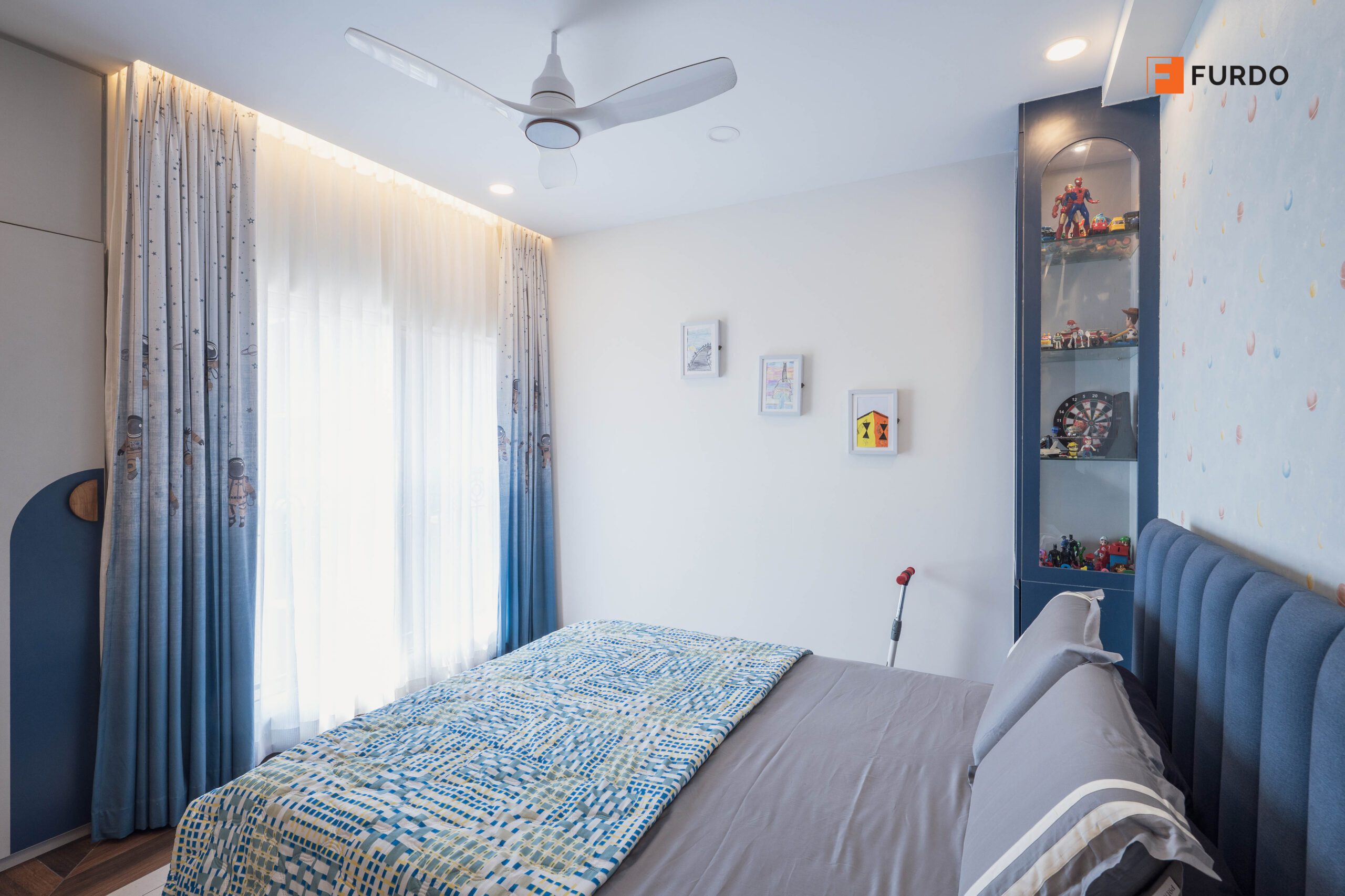
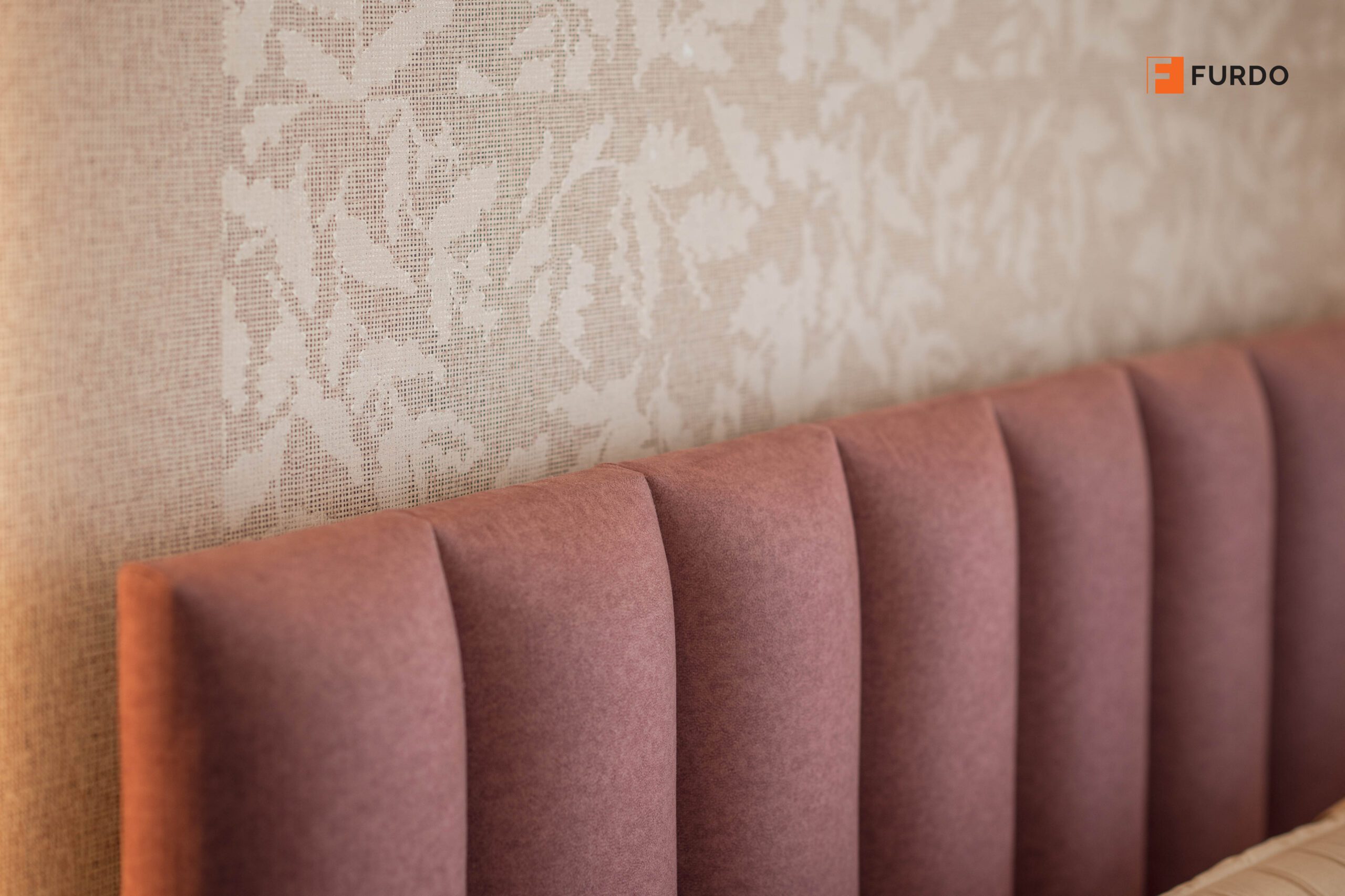
A sofa or a headboard is the single largest expanse of fabric in most rooms, which makes it the highest-leverage place to bring in a handloom weave or a hand-block print. In this Bangalore bedroom, a muted rose channel-tufted headboard sits against a woven, botanical-patterned wall panel — the kind of layered texture that would look flat in a single smooth fabric, but reads as considered and warm in a handloom-inspired weave. The trick is restraint: one strong textured piece per room, not three competing for attention.
We treat upholstery fabric selection the same way we treat any material decision — durability first, aesthetics second, because a beautiful fabric that pills or fades within a year isn’t actually luxury. Performance-treated handloom blends and tightly woven natural fibres give you the tactile warmth without sacrificing how the piece wears.
03 Curtains: the room’s softest architecture
Curtains do more structural work in a room than almost any other soft furnishing — they frame a window, control how much of Bangalore’s or Hyderabad’s daylight actually reaches the room, and set the room’s colour temperature more than most people realise. A handloom or block-printed curtain fabric, layered with a sheer for daytime privacy, gives a window treatment real depth instead of a single flat panel. In the bedroom shown above, an indigo-toned patterned curtain against a soft sheer does exactly that — filtering hard afternoon light into something the room can actually live with.
The best textile choice in a room is rarely the loudest one. It’s the one that still looks right a year later, once the newness has worn off and only the craft is left.
04 Where it shows up in Hyderabad interiors
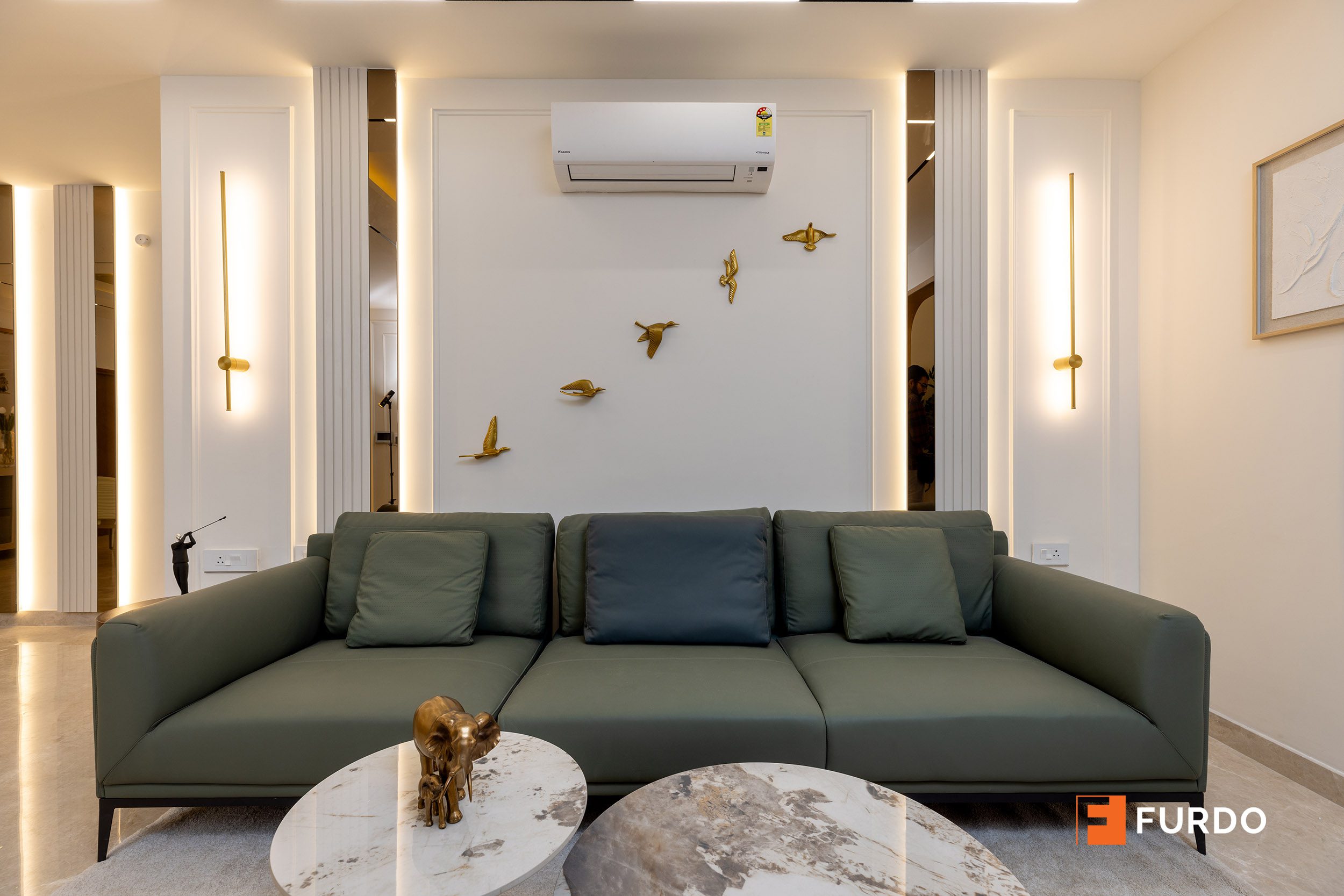
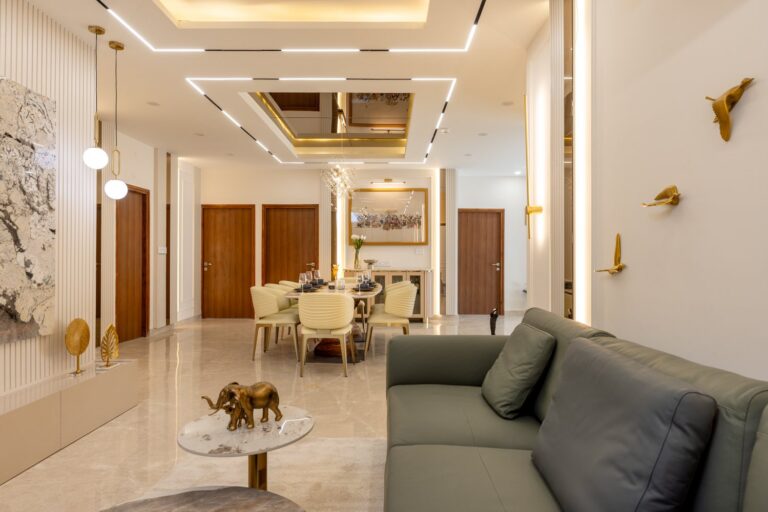
Not every piece in a room needs to carry the textile story — sometimes the strongest move is to let one hero fabric moment do the work, and keep everything else quiet. In this Hyderabad living room, a deep green leather sofa anchors the space, with cushions and drapery in handloom-adjacent weaves carrying the textile warmth instead. It’s a pairing we come back to often: a structured, durable material like leather or a tight weave for the pieces that take the most daily wear, and a softer handloom textile for the accents that get changed and refreshed more easily.
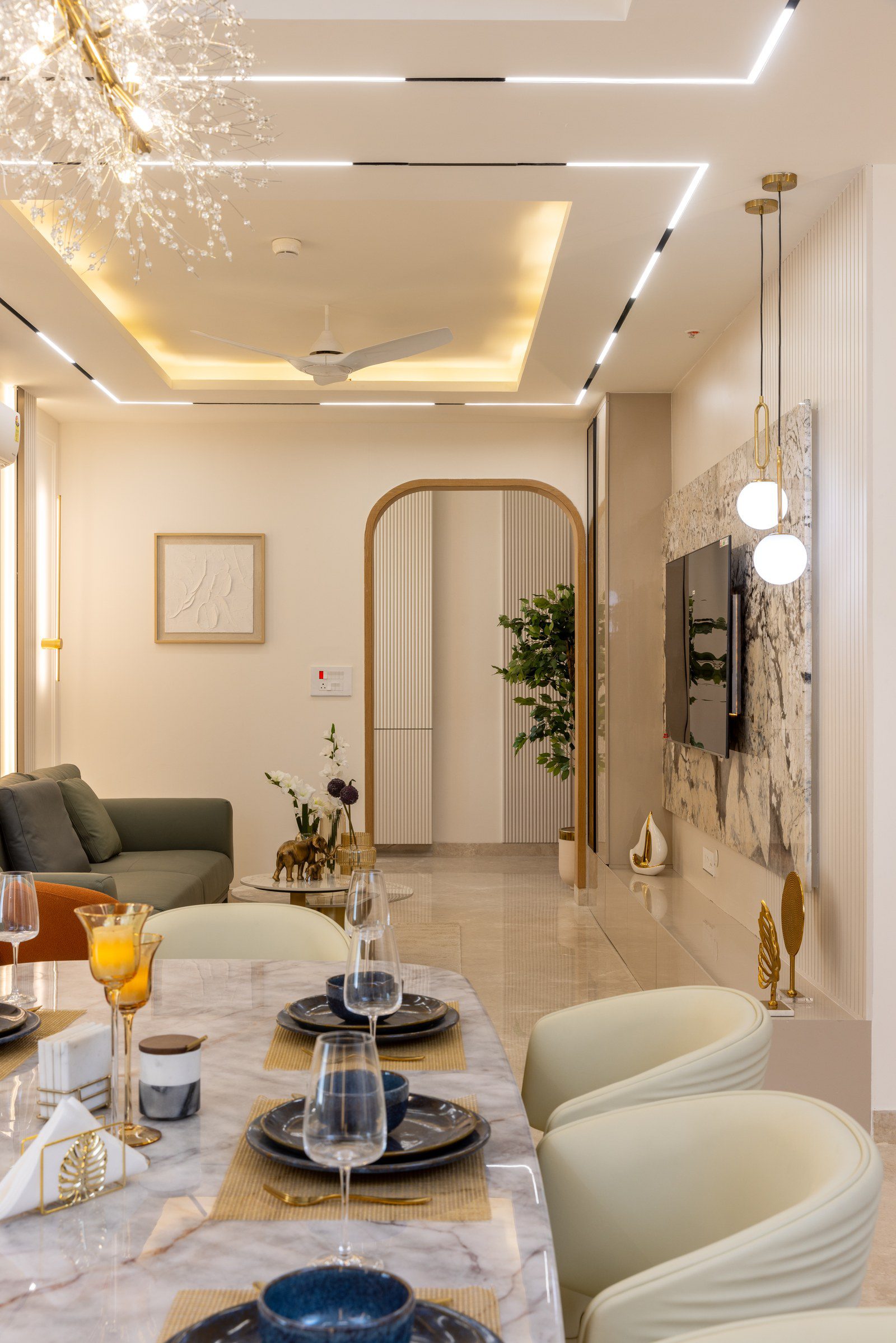
Dining chairs are another place where fabric choice matters more than people expect. A dining room sees more direct contact — elbows, spills, the everyday friction of actually eating at the table — so we lean toward tightly woven, stain-resistant upholstery here even when the rest of the room carries a softer handloom textile elsewhere.
Craft and durability, chosen together
Furdo has designed and delivered 4,500+ homes across Bangalore, Hyderabad and Chennai, and is 4+ star rated across platforms. Every soft-furnishing decision — upholstery, curtains, cushions — is made alongside the same joinery and finish choices that carry our 10-year warranty, so a handloom-inspired fabric is chosen for how it performs over years, not just how it photographs on handover day. Before any material is ordered, you see HD photoreal 3D renders of two rooms of your choice, textiles included.
05 How to bring handloom into your own home
- Pick one hero fabric moment per room — a headboard, a sofa, or a curtain — rather than spreading a bold weave across every surface.
- Pair a structured, durable material (leather, tight weave) with a softer handloom textile so the room has contrast, not competition.
- Choose performance-treated or tightly woven handloom blends for high-contact pieces like dining chairs and daily-use sofas.
- Let the curtain fabric do double duty — filtering light and carrying colour — rather than treating it as an afterthought once the furniture is chosen.
Want to bring handloom textiles into your own home’s design?
Book ConsultationFrequently asked questions
Is handloom fabric durable enough for daily-use furniture?
Yes, when the weave and finish are chosen correctly — tightly woven, performance-treated handloom blends hold up well on sofas and dining chairs. We reserve the more delicate weaves for lower-contact pieces like cushions and drapery.
Does handloom textile work with a modern, minimal interior?
It works especially well there — a single handloom accent piece against clean lines and quiet walls tends to stand out more, not less, than in a busier, more maximalist room.
Can Furdo source handloom and block-print fabrics directly?
Yes — your designer works with you to select the fabric family for upholstery, curtains and cushions as part of the overall material plan, alongside the same certified-plywood and Hettich-hardware choices that carry our 10-year warranty.
How do I keep handloom textiles looking good over time?
Choose the right weave for the right piece — durable for daily contact, delicate for accents — and ask your designer about a protective fabric treatment for anything in a high-traffic room.