 Book Consultation
Luxury bedroom interior design in Bangalore: a room with one job
Bed clearances, wardrobe depth, lighting circuits, blackout and the materials that survive a Bangalore monsoon. The decisions underneath the photographs, with the numbers attached.

Luxury bedroom interior design in Bangalore is usually judged from the doorway, which is the wrong place to stand. A bedroom has one job. You sleep in it. The wardrobe run, the panelled wall, the television, the window seat, all of it is negotiated against that job, and the negotiation is won in millimetres no photograph shows. The rooms here are from a model villa at Saiven Mulberry Groves, Bangalore, so the floor plates are generous, and we say where a flat needs the numbers adapted. Our villa planning guide for Bangalore covers the wider sequence.
This is the reasoning underneath the pictures, with the numbers attached. A bedroom fails on clearances long before it fails on taste.
01 The bed comes first, and it decides the rest
Start with the mattress. An Indian king runs about 1830mm by 1980mm and a queen about 1525mm by 1980mm, though sizes vary by maker, so measure the bed you are actually buying, and an upholstered frame adds 60mm to 100mm each side.
On each side someone sleeps from, keep 750mm of clear floor, enough to sit on the edge and stand without turning sideways. Six hundred is the minimum and it feels tight in the dark. Against a wall, hold 450mm so you can still make the bed. At the foot, leave 900mm where a hinged wardrobe sits opposite, because the shutter arc and the walkway do not overlap.
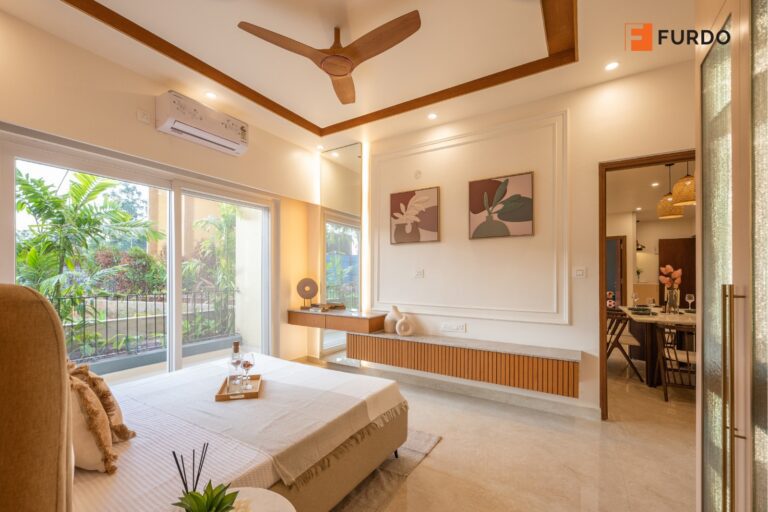
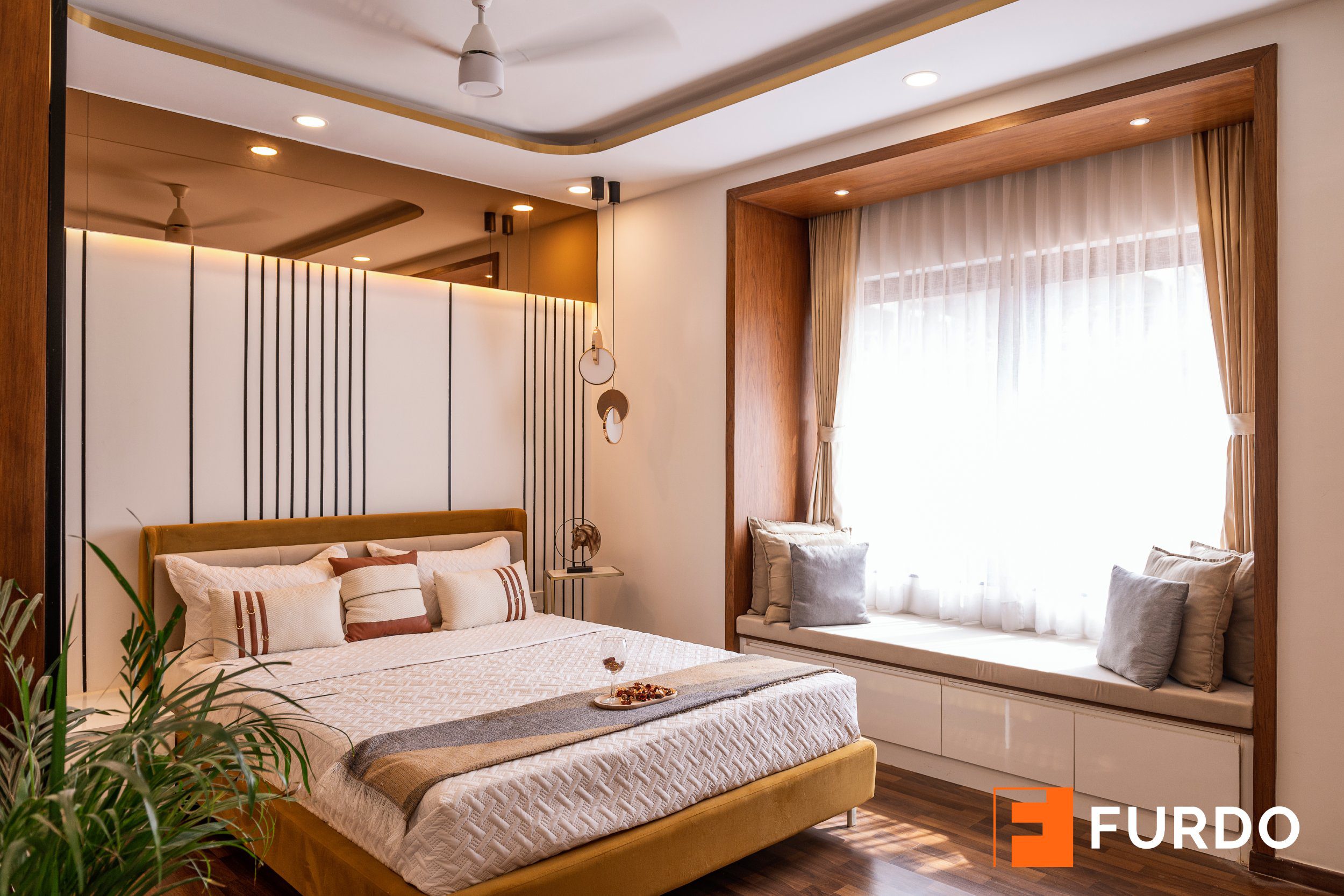
Then the openings. A 900mm door leaf sweeps a 900mm arc, and it should not sweep into the bed or the wardrobe. Keep the headboard off the window wall, because that wall needs a curtain track, a pelmet and a blackout return, and a headboard fights all three. In the villa bedroom above, the window sits at ninety degrees to the bed.
02 Wardrobes: depth first, doors second
Six hundred millimetres is the number to defend. A shirt on a standard hanger projects roughly 550mm from the back panel. A 600mm carcass, less an 18mm back and an 18mm shutter, leaves around 560mm inside, the first depth at which a garment hangs front-facing without the door pressing on a sleeve.
Doors cost floor space differently. Hinged shutters give the whole opening and the full depth, but need 600mm of clear swing, which is floor you cannot furnish. Sliding needs nothing in front, but the track takes 100mm of internal depth and one panel always parks in front of another. Under roughly 3.3m of room width, sliding wins.
Size storage to what the household owns, not to what the elevation wants. Long hanging at 1600mm clear, short hanging at 1050mm doubled, drawers rather than shelves, loft at 2100mm to its underside. A wardrobe 300mm short of the real volume fills the room with secondary storage in two years.
Bedroom joinery gets opened twice a day for ten years
A wardrobe is a mechanism before it is a surface. The shutter is only as good as the hinge behind it, and the carcass only as good as the board it is cut from. Neither shows on handover day. Both show three monsoons later.
- 4,500+ homes delivered
- 10-year warranty on woodwork
- Branded certified plywood
- Hettich hardware
- 3D renders for two rooms before you commit
- 4+ star rated
03 Light, panels and the Bangalore night
A bedroom needs three circuits and most get one. Ambient for moving around, roughly 100 lux at floor level. Task light at the pillow, 300 to 400 lux, from a wall reader or a pendant about 550mm above the mattress. And a low circuit for the middle of the night.
The detail that matters most costs almost nothing. The bedside circuit must switch at the door and again at the bed. Ask for it at the electrical drawing stage, since retrofitting means chasing a finished wall. Keep the room at 2700K, 3000K at the outside.
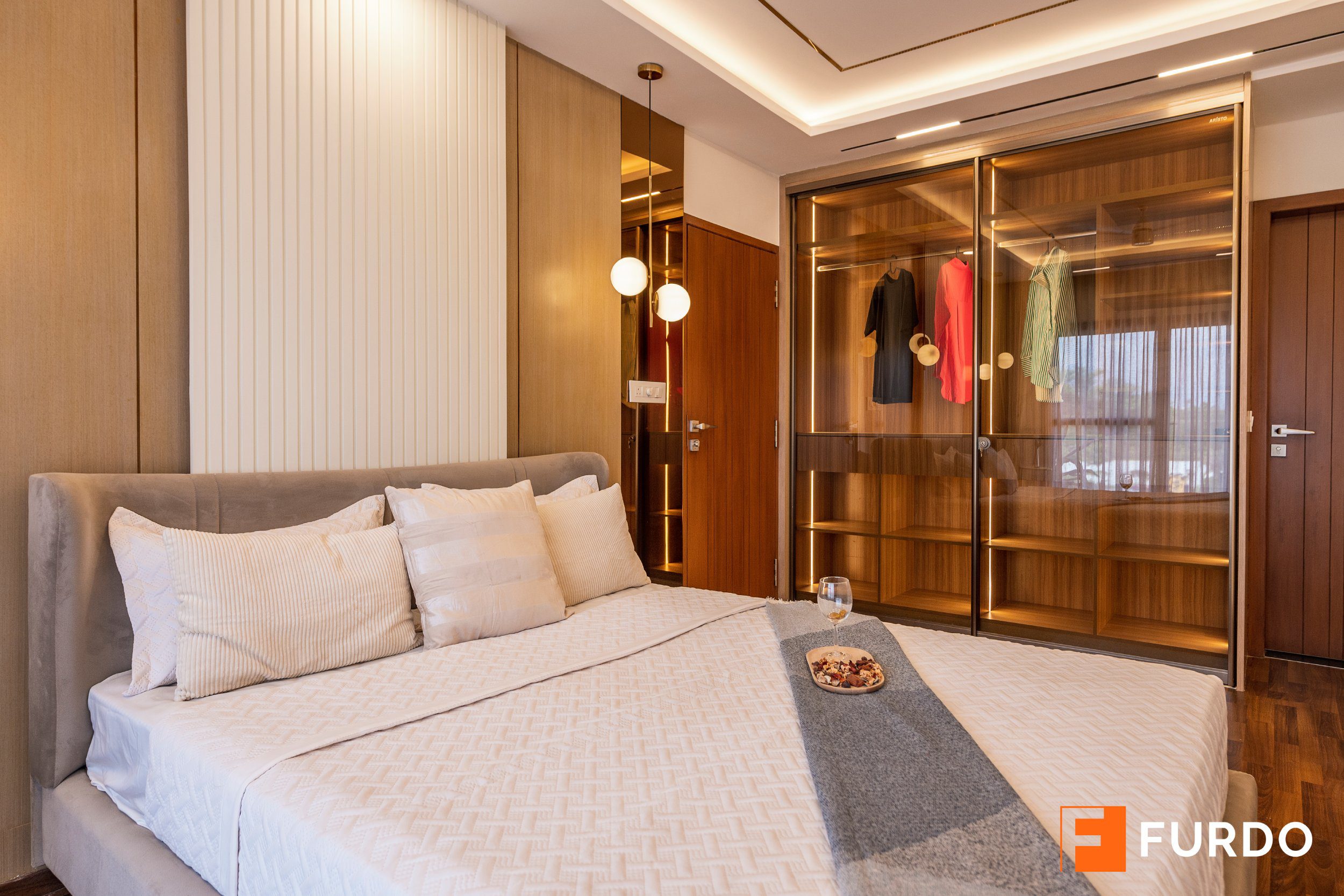
Panelling is where budgets go to die, so be clear about what it buys. A fluted wall behind the bed is worth it. You rarely touch it, it takes the edge off sound, and it gives a cove something to graze. The same flute on a shutter you open daily is a maintenance problem, because a 15mm groove collects dust a cloth cannot reach. Murals date fastest, so keep one to the headboard wall.
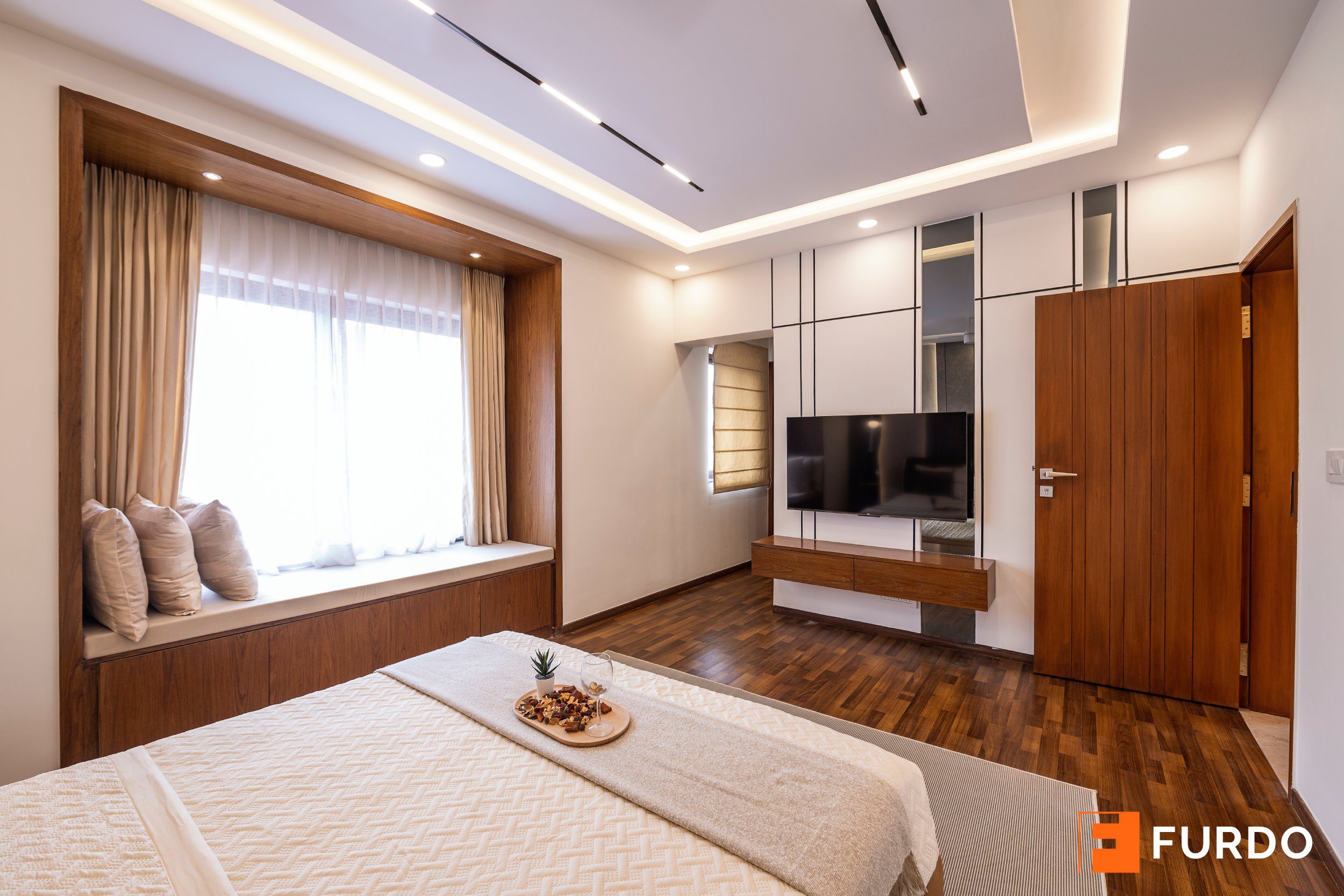
That wall usually carries the television, which arrives after the joinery. Fix the screen size and mounting height before the panel is drawn, run conduit behind it, and use a 250mm ledge at 900mm rather than a cabinet, because anything deeper eats the foot clearance. Our piece on luxury wardrobe and storage design goes further.
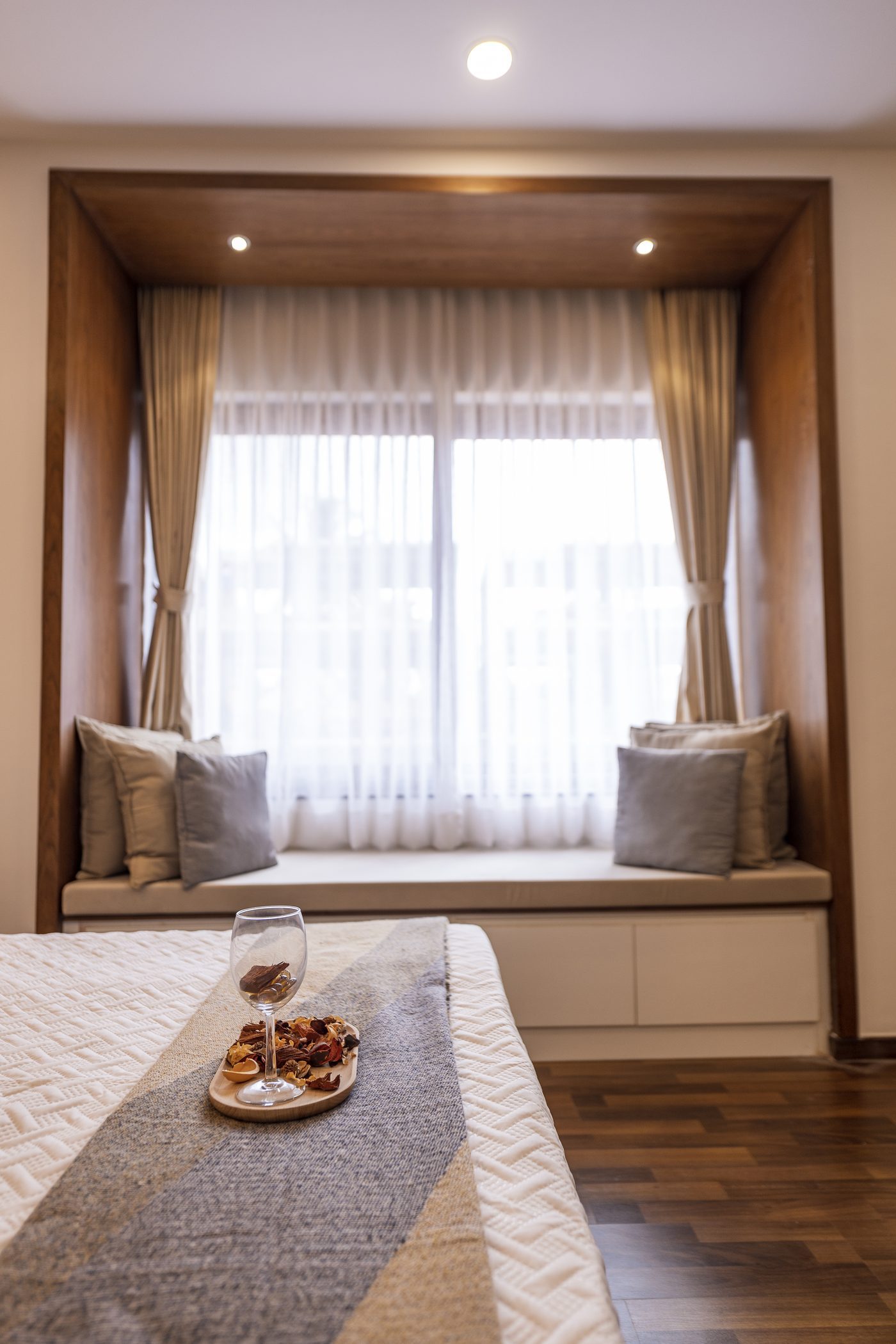
Then the Bangalore part. The sun is up before six in summer, and most bedrooms face a road where the day starts with horns. Blackout is a technical detail, not a fabric choice. Light comes around the edges, so specify a track returning 100mm into the reveal each side, a pelmet at the top, and a drop finishing 10mm off the floor. On noise, furnishing helps and glazing solves.
We can check the dimensions of your bedroom layout before the joinery is frozen.
Book Consultation04 What to check in your own home
- Tape the clearances onto the floor. Mark the mattress footprint and the wardrobe swing before you approve a layout, then walk it in the dark. If you turn sideways to pass the bed, the plan is 150mm out.
- Count hanging metres, not shelves. Ask for long hanging at 1600mm clear and short hanging at 1050mm, then compare against your cupboards now.
- Ask where the second switch is. The bedside circuit should work from the door and from the bed. If the layout shows one switch plate, ask for two-way switching before plastering.
- Check the curtain detail, not the curtain. Look for the side return into the reveal, the pelmet, and the drop to the floor. Blackout cloth on a bare rod still puts a line across your pillow at six.
- Ask to see the grade stamp on the board. Branded certified plywood carries a mark you can look at. Moisture-resistant grade in the carcass, and against any bathroom wall.
A materials note on humidity
Bangalore runs 60 to 80 percent relative humidity through the monsoon and drops sharply by January. Solid wood moves with it, roughly 2mm to 3mm across a 600mm panel, which is why a solid shutter can bind in August and gap in February. Branded certified plywood is cross-laminated, so movement in one veneer is held by the layer at right angles. On orientation, see our room-by-room Vastu guide.
05 How Furdo plans this
Design settles the bed footprint, the clearances and the wardrobe depths on plan, before any elevation is drawn, because these cannot be fixed later without moving joinery. Visualize shows it in high-definition, photoreal 3D renders of two rooms before you commit. Build turns the specification physical, with branded certified plywood and Hettich hardware made at an in-house manufacturing facility, under a 10-year warranty on the woodwork. If you are still choosing a studio, our guide to choosing a luxury interior designer in Bangalore lists the questions worth asking.
06 Frequently asked questions
How much clearance do I need around a bed in a Bangalore apartment?
Keep 750mm of clear floor on each side someone sleeps from, and treat 600mm as the minimum. Against a wall, hold 450mm so you can still make the bed. At the foot, 900mm where a hinged wardrobe sits opposite.
Why is 600mm the standard wardrobe depth?
A garment on a hanger projects about 550mm from the back panel. A 600mm carcass leaves roughly 560mm inside once the back and shutter are subtracted, the first depth at which clothes hang front-facing without the door pressing on a sleeve.
Sliding or hinged wardrobe doors for a small bedroom?
Sliding, in most compact rooms. Hinged shutters need about 600mm of clear swing, and under roughly 3.3m of room width that collides with the bed. The trade-off is 100mm of internal depth lost to the track.
Is solid wood better than plywood for bedroom furniture in Bangalore?
Not for carcasses and shutters. Humidity swings widely between the monsoon and January, and solid wood moves with it. Branded certified plywood is cross-laminated, so the movement is restrained. Keep solid wood for beading and edges.
Are fluted panels and wall murals worth it in a bedroom?
A fluted panel behind the bed is worth it. You rarely touch it, and it gives cove lighting something to graze. The same flute on a wardrobe shutter collects dust in a groove you cannot clean. Murals date fastest of all.